The Complete Guide To Hibiscus: Tea, Hair, Skin And Cooking
Essentially NaturalWith its vivid colour and tart, fruity flavour, hibiscus can seem almost too striking to come from a dried botanical. You can brew it into a brightly coloured tea, add it to hair rinses and henna, use it in simple skincare DIYs and even bring its tart flavour into jams, syrups and sauces.
While there is true versatility, there is one small complication: there are hundreds of species of Hibiscus, and they are not all used in exactly the same way.
The classic “Hibiscus tea” found around the world is most commonly associated with Hibiscus sabdariffa, also known as roselle, meanwhile Hibiscus rosa-sinensis has its own long history of culinary and beauty use. This species is particularly well known in traditional haircare.
What Is Hibiscus?
Hibiscus is a large and diverse genus containing hundreds of species, ranging from herbs to shrubs and trees. The plant part used depends on the species. In Hibiscus sabdariffa (roselle), the fleshy calyx surrounding the seed capsule is commonly dried for the classic tart hibiscus drink, while Hibiscus rosa-sinensis is better known for its showy flowers and its traditional culinary and cosmetic uses. Depending on the species, cultivar and plant part, hibiscus can contain compounds including anthocyanins, flavonoids, organic acids and mucilaginous polysaccharides.

Anthocyanins are particularly interesting because they contribute to the dramatic red and pink colours associated with Hibiscus. They are also sensitive to pH, which means Hibiscus preparations can change colour depending on whether the surrounding mixture is acidic or alkaline.
Hibiscus contributes flavour, colour and natural compounds to a surprising range of DIY projects.
How To Make Hibiscus Tea
Hibiscus makes a fruity, pleasantly tart tea, commonly sold in blends but often enjoyed solo as a caffeine-free drink.
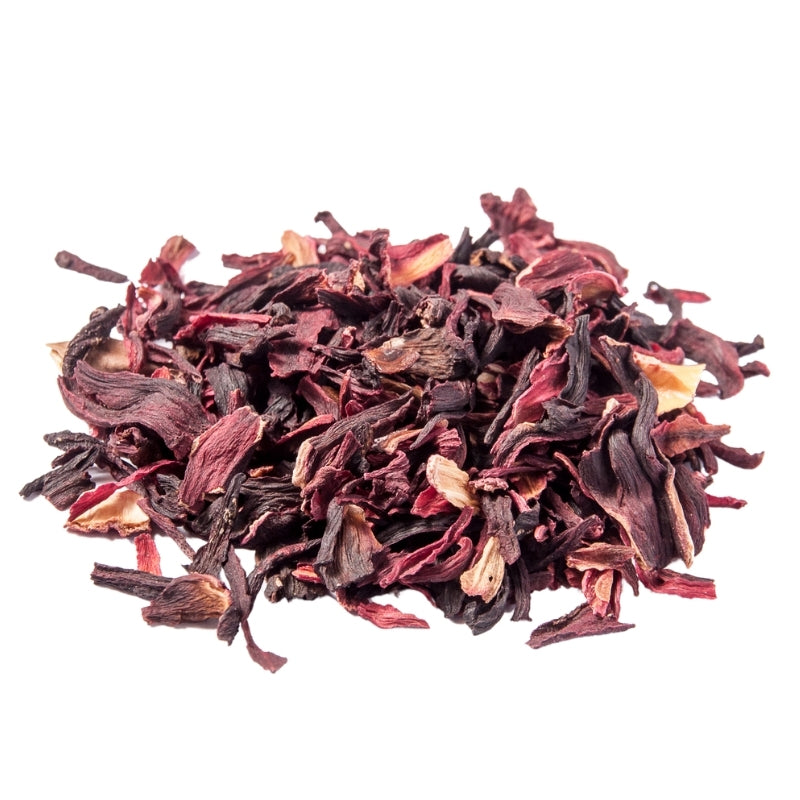
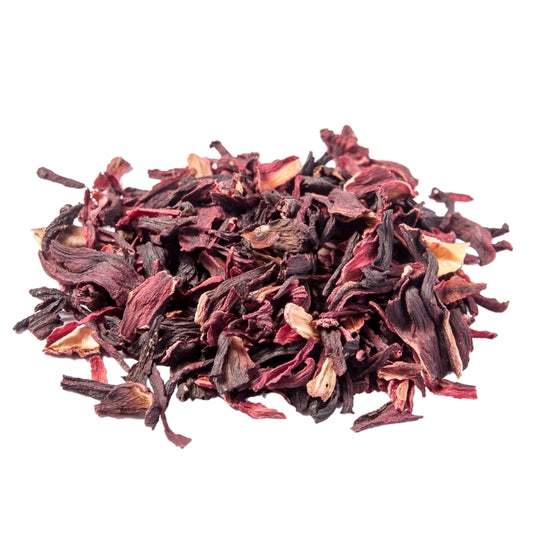
As a pure tea, add a small spoonful of dried Hibiscus Flowers to a cup or teapot, cover with freshly boiled water and allow it to steep until the colour and flavour are strong enough for your personal preference - for most that is between 5-15 minutes. Strain well before drinking.
It can be enjoyed hot, but Hibiscus also works very well served cold. Brew it stronger, allow it to cool and serve over ice with ingredients like Mint, Ginger, Citrus or a little Honey.
Hibiscus can also be blended with other herbal teas or juices. Rooibos works particularly well because its softer, slightly sweet flavour helps balance Hibiscus's sharper fruitiness while keeping the drink naturally caffeine-free.
It is worth remembering that traditional roselle tea made from Hibiscus sabdariffa may taste different from an infusion of Hibiscus rosa-sinensis. Check which hibiscus species and plant part you are using, as these can affect both flavour and how the botanical is traditionally used.
While Hibiscus teas have a long history of traditional wellness use and have attracted considerable scientific interest, they're still enjoyed as flavour-filled teas rather than treated as medicines. Speak to a healthcare provider if you are pregnant, breastfeeding, taking medication or considering herbal products for a specific health condition. Stop drinking immediately and seek medical help if experiencing any concerning reaction to drinking Hibiscus tea.
Traditional Uses Of Hibiscus
Hibiscus has a surprisingly long and varied history of use, and different species have found their way into traditional food and wellness practices around the world.
Hibiscus has traditionally been prepared as teas and infusions in parts of Africa, the Middle East, Asia and the Americas. Depending on the region, these preparations have been used traditionally in relation to circulation, high blood pressure and cholesterol levels, as well as liver and digestive health.
Hibiscus has also been used traditionally as a diuretic and laxative, uses that were sometimes associated with ideas of ‘cleansing’. In some traditions it was taken to stimulate appetite, while preparations have also been used historically for fevers, colds and coughs.
These traditional uses are interesting, but they should not be confused with proven medical treatments. Modern research has investigated Hibiscus sabdariffa for several of these same areas - particularly blood pressure and blood lipids - with some promising findings, but the results depend on the species, preparation and concentration used.
What we can say more confidently is that Hibiscus contains a range of naturally occurring plant compounds, including anthocyanins and other polyphenols that acts as an antioxidant when ingested. These compounds, particularly anthocyanins, also contribute to the brilliant red and purple colours associated with many hibiscus preparations.
Traditional Hibiscus Haircare
The story changes slightly when we move from herbal tea to hair.
Hibiscus rosa-sinensis has a particularly strong history in traditional Asian haircare. The leaves and flowers were crushed into pastes, infused into Coconut or Sesame Oil and incorporated into herbal hair washes and conditioning preparations.
Traditionally, Hibiscus was used to help soften and condition the hair, improve its appearance and keep dry hair feeling more manageable. Its leaves contain naturally mucilaginous compounds, which may help explain why they became popular in traditional conditioning preparations.
Hibiscus has also traditionally been applied to the scalp for dandruff and used in preparations intended to keep the scalp comfortable. These traditional practices do not mean Hibiscus has been proven to treat dandruff or scalp disease, but they are an interesting part of its long cosmetic history.
One of the more unusual traditional uses is on the face! Fresh Hibiscus rosa-sinensis flowers darken when crushed, and traditional references describe Hibiscus being used to deepen the appearance of dark hair and even eyebrows.
Modern Uses Of Hibiscus For Hair
While Hibiscus has not been proven to make human hair grow faster, it can still be a useful botanical addition to haircare.
Hibiscus rosa-sinensis contains mucilaginous plant compounds, particularly in the leaves, which helps explain its long traditional use in conditioning preparations. When used as an infusion or herbal rinse, Hibiscus may help the hair feel softer and smoother while adding shine and making dry or rough hair feel more manageable.
Its role is therefore better understood as conditioning the hair you already have, rather than stimulating new growth.
One frequently cited study did find interesting hair-growth activity from Hibiscus rosa-sinensis, particularly the leaves. However, this research involved rats and isolated follicles using specially prepared extracts. It is not evidence that pouring Hibiscus tea over the scalp will reactivate follicles, reverse hair loss or significantly increase the rate of human hair growth.
As A Hibiscus Hair Rinse
Steep dried Hibiscus in freshly boiled water until you have a strongly coloured infusion. Allow it to cool completely and strain extremely well.
After washing your hair, pour or work the infusion through the lengths. Leave it on briefly before rinsing, or follow with your normal conditioner.
Hibiscus does not replace a proper conditioner. A formulated conditioner will generally provide substantially more slip and detangling than a herbal infusion.
Be cautious on blonde, grey, bleached or very porous hair, as botanical pigments may be considerably more visible. If at risk, try a strand test before doing your entire head of hair.
What About Hibiscus Leaves?
Hibiscus leaves are not interchangeable with Hibiscus flowers.
Leaves of Hibiscus rosa-sinensis have a particularly strong tradition of use in hair preparations and were actually more promising than the flowers in the often-cited animal hair-growth research.
Roselle leaves from Hibiscus sabdariffa, on the other hand, also have established culinary uses. In different food traditions they may be cooked as sour leafy vegetables and incorporated into soups, sauces and other dishes.
How To Use Hibiscus In Skincare
Hibiscus flowers contain naturally occurring flavonoids, anthocyanins and other plant compounds with antioxidant activity, which has made Hibiscus an interesting ingredient in skincare.
In Hibiscus rosa-sinensis, researchers have identified anthocyanins alongside flavonoids derived from Quercetin and Kaempferol, as well as compounds such as Catechin and Epicatechin. Extracts have demonstrated antioxidant activity in laboratory testing, making Hibiscus an interesting botanical ingredient for formulas designed to help protect the skin from environmental oxidative stress.
Other Hibiscus species, particularly Hibiscus sabdariffa, have also been investigated for their effects on processes involved in skin ageing, including oxidative stress, collagen breakdown and melanin production.
This is sometimes exaggerated online into claims that Hibiscus is “Natural Botox”, dramatically boosts collagen or acts like a professional acid peel.
That goes much further than the evidence supports.
Laboratory and animal research on concentrated Hibiscus extracts is interesting, but a homemade Hibiscus infusion is a much simpler preparation.
For DIY skincare, a cooled and well-strained Hibiscus tea can be incorporated into a fresh rinse-off mask or used as part of the water phase of a properly preserved formula, although botanical infusions introduce greater preservation and stability challenges than distilled water alone. Hibiscus Powder can also be used in rinse-off masks, although its naturally coarse texture means it should not be scrubbed aggressively over the face.
Patch test first and avoid the eye area.
Most importantly, remember that once dried Hibiscus is mixed with water, you have created a water-based botanical preparation that can support microbial growth. Do not brew a large bottle of homemade Hibiscus tea as a toner and leave it in the bathroom for weeks. Make small amounts for immediate use unless you understand how to formulate and preserve water-based cosmetics correctly – Hydroalcoholic extracts are another option, but their microbial stability and skin tolerance depend on the final alcohol concentration.
How To Use Hibiscus In Cooking
Hibiscus can bring both colour and tartness to food.
Roselle, Hibiscus sabdariffa, has the strongest traditional culinary history and is widely used internationally in drinks, syrups, jams, jellies, sauces and desserts.
The same basic idea explains why Hibiscus can be so useful in the kitchen: its fruity acidity works particularly well with sweetness.
Hibiscus infusions are commonly tried in homemade syrups, fruit sauces, jellies, drinks or desserts. Hibiscus Powder can also be experimented with in baking and other foods where both its colour and tart flavour are welcome.
Just check which Hibiscus species your recipe calls for. Recipes written specifically for roselle calyces may not taste or behave exactly the same when another Hibiscus species is substituted.