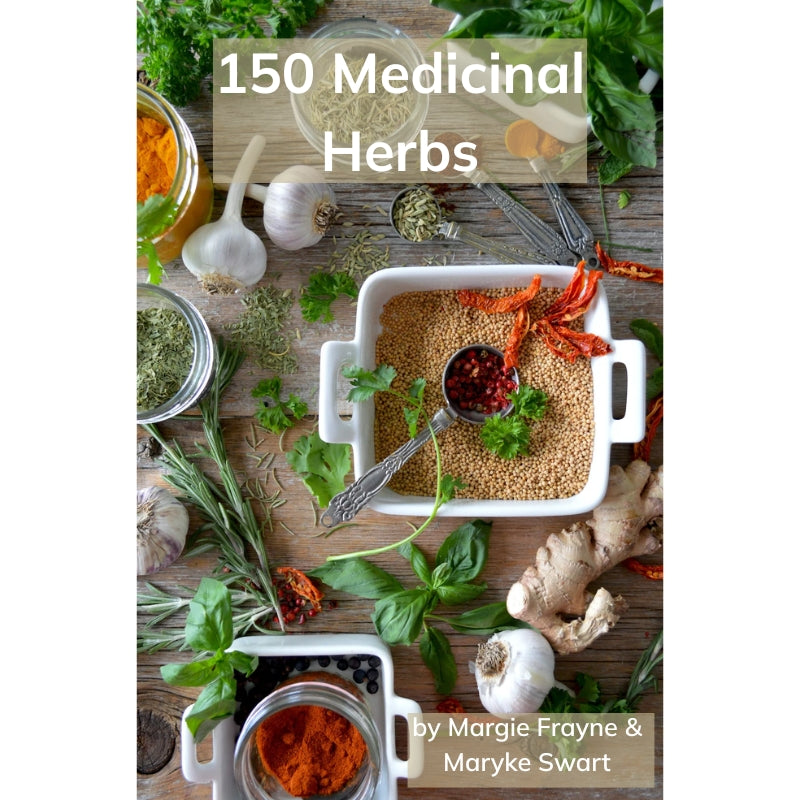
150 Medicinal Herbs (Paperback)
150 Medicinal Herbs (Paperback)
Couldn't load pickup availability
150 Medicinal Herbs is a paperback reference book that explores traditional herbal knowledge for everyday wellness needs. It is organised alphabetically for easy browsing and includes botanical names, origins, common applications, preparation methods, and key precautions to support responsible use. Written in English, it also includes botanical and regional plant names where relevant, which may occasionally reflect other languages tied to a plant’s local heritage.
Key properties
- Product Type: Paperback book
- Authors: Margie Frayne and Maryke Swart
- Pages: 194
- Language: English
- Organisation: Alphabetical herb entries
- Includes: Botanical names, origins, applications, precautions, and usage guidance
- Preparation Methods Covered: Infusions, decoctions, essential oils, and other common herbal preparations
- Reference Feature: Ailments quick-reference section at the end
What it’s used for
- Look up herbs quickly and compare common traditional applications
- Learn practical preparation approaches, from teas and infusions to oil-based preparations
- Understand typical precautions and considerations before using a new herb
- Build a home reference library for natural living and plant-based learning
- Support more informed conversations with herbal practitioners or natural health professionals
This product is commonly used to:
Who it’s for
- Beginners who want an easy-to-browse introduction to medicinal herbs
- Home herbalists who prefer a clear alphabetical reference format
- Readers interested in indigenous South African herbs alongside global staples
- Natural living enthusiasts building a practical home reference library
- Gift-giving for plant lovers and wellness learners
- A substitute for medical diagnosis, treatment, or personalised healthcare advice
- A guide for self-managing serious or persistent symptoms without professional support
- A guarantee of outcomes for any health condition
This product is suitable for:
This product is not:
How to use
- As a Quick Reference: Use the ailments guide at the back to narrow down options, then read the full herb profile for context and precautions.
- As a Study Guide: Read entries over time, noting botanical names and origins to improve accurate identification.
- As a Practical Companion: Use preparation guidance as a learning tool, then apply the safety notes and adjust your approach based on your personal context.
Safety instructions
- Use this book for education and general reference, and consult a qualified healthcare professional for medical concerns.
- Always check precautions, especially if you are pregnant, breastfeeding, have a medical condition, or take medication.
- If you are unsure of plant identification, confirm the correct species before use.
- Start conservatively with any new herb and discontinue use if you experience adverse reactions.
- Keep herbal materials and preparations out of reach of children and pets unless advised by a professional.
Faqs
Q: Is this book beginner-friendly?
A: Yes. The alphabetical format makes it easy to navigate, and the preparation guidance and precautions support step-by-step learning.
Q: Does it include indigenous South African herbs?
A: Yes, it includes indigenous South African varieties alongside herbs used in other regions.
Q: Does it provide exact dosages?
A: It focuses on usage guidance and precautions rather than personalised dosing, which can vary and is best discussed with a qualified professional.
Q: Can it replace medical advice?
A: No. It is an educational reference and should be used alongside appropriate professional guidance when needed.
Q: Why might I see names from other languages if the book is in English?
A: Botanical and regional plant names can reflect a plant’s local heritage, so you may occasionally see names linked to the regions where a plant is traditionally used.
About These Botanicals
This product is grown in an organic and regenerative fashion with as minimal use of insecticides, pesticides, herbicides and fungicides as possible, in certified organic fertilizer. The product is sourced food grade. It is not certified organic. Suitable for Kosher, Halaal and Hindi diets.