


Sodium Lactate Solution - Essentially Natural
Sodium Lactate Solution - Essentially Natural
Restock in progress Stock may still be with our manufacturing team or arriving shortly. Orders usually ship within 1-3 working days.
Couldn't load pickup availability
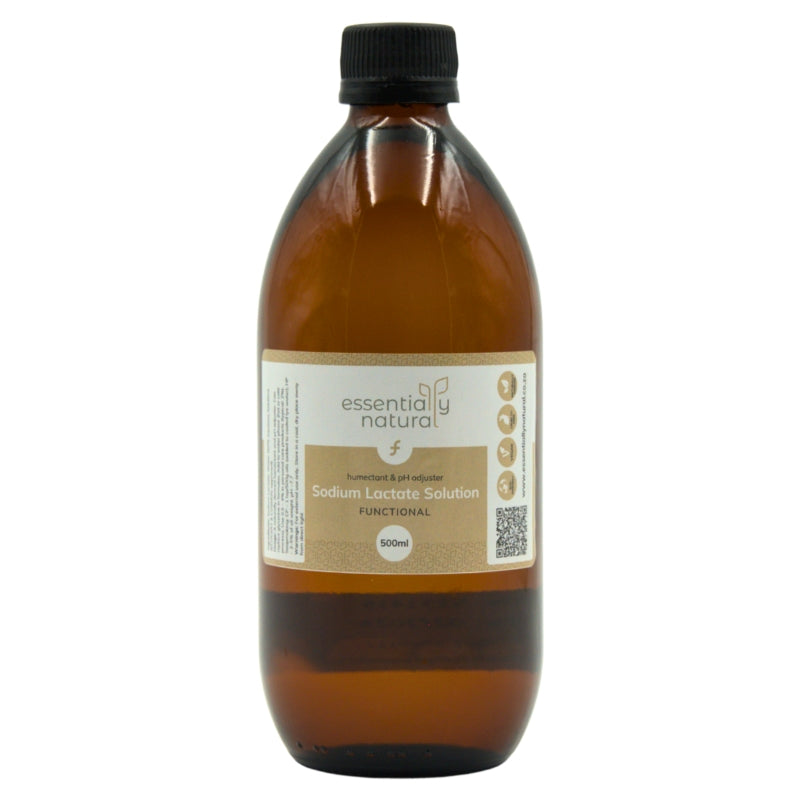
Essentially Natural Sodium Lactate Solution is a 60% aqueous solution of sodium lactate, the salt of lactic acid. It is used as a humectant in skincare and haircare formulations, helping attract and retain water for a moisturised, comfortable feel. In cold and hot process soap making, it is commonly added to help bars harden sooner, unmould more easily and maintain a firm finish. This water-based ingredient can be processed hot or cold and is normally used at low levels.
♡ Why we love it: Sodium Lactate Solution is useful across both personal care formulation and traditional soap making. It gives makers a reliable way to support moisture in water-based products while also helping improve the handling and firmness of handmade soap bars.
Key properties
- INCI Name: Sodium Lactate, Aqua
- Ingredients: Sodium lactate and water
- Concentration: 60% aqueous solution
- Ingredient Type: Humectant and soap-making additive
- Form: Liquid
- Solubility: Water soluble
- Typical Usage Rate: 0.5-4% in personal care formulations
- Processing: Suitable for hot or cold processing
- ECOCERT Approved
- COSMOS Approved
- Suitable For: Skincare, Haircare, Soap Making And Water-Based Cosmetic Formulations
- Storage: Store tightly sealed in a cool, dry place away from heat and direct sunlight
What it's used for
- Humectant support in creams, lotions, gels and conditioners
- Helping skin and hair feel comfortably moisturised
- Supporting moisture in scalp and haircare formulas
- Hardening cold process and hot process soap bars
- Helping cold process soaps unmould sooner
- pH-buffering systems when used alongside lactic acid
- Replacing part of the glycerine in suitable water-based formulas
Who it's for
- Formulators wanting a water-soluble humectant
- Soap makers looking for firmer bars and easier unmoulding
- Water-based skincare and haircare formulations
- Makers assessing alternatives to glycerine
- Formulators able to test electrolyte-sensitive systems
- Anhydrous products with no water phase
- Direct use as a finished skincare product
- Formulations that cannot tolerate added electrolytes
- Anyone expecting it to preserve a water-based product
- Products that have not been tested for stability and viscosity
This Product Is For:
This Product Is Not For:
How to use
- As a Humectant: Add to the water phase at 0.5-4% and mix thoroughly.
- As a Glycerine Alternative: Replace part of the glycerine in a formula and assess the resulting texture and skin feel.
- In Cold Process Soap: Add approximately 1 teaspoon per 500g of oils to cooled lye water.
- In Hot Process Soap: Use at approximately 3-5% of the oil weight and incorporate during processing.
- As a Buffering Ingredient: Use alongside lactic acid only in a properly designed and tested buffering system.
- Processing Tip: Test viscosity and stability when using electrolyte-sensitive gums, polymers or thickeners.
Safety instructions
- For cosmetic formulation and soap-making use
- For external use only
- Do not ingest
- Avoid contact with eyes
- Patch test finished topical formulations
- Wear appropriate protective equipment when working with soap-making lye
- Store tightly sealed away from heat and direct sunlight
- Keep out of reach of children and pets
Faqs
Q: Does Sodium Lactate feel sticky on the skin?
A: It is generally comfortable at normal use levels, although higher concentrations can create a tackier feel.
Q: Does it replace a preservative?
A: No. Water-containing formulas still require a suitable preservation system.
Q: Why is it used in handmade soap?
A: It helps soap become firm sooner, which can make unmoulding easier and improve the finished bar’s durability.
Q: Can it be used with electrolyte-sensitive thickeners?
A: It can reduce viscosity in some systems, so a small stability test is important before scaling the formula.
Q: Can it completely replace glycerine?
A: It can replace some or all of the glycerine in certain formulas, but the skin feel, stability and compatibility
should be tested.




Recently viewed
Related Reads
-

Quick Guide To Natural Humectants
Learn all about the what, why and how of natural humectants. Humectants moisturise the skin in a unique way: they attract water to the skin. Products work better when the skin...
Quick Guide To Natural Humectants
Learn all about the what, why and how of natural humectants. Humectants moisturise the skin in a unique way: they attract water to the skin. Products work better when the skin...
-

Easy Unisex DIY Lip Stains
Healthy lips are the ideal. That’s where this simple DIY lip stain steps in, giving you smooth, healthy colour using ingredients you probably already have at home.
Easy Unisex DIY Lip Stains
Healthy lips are the ideal. That’s where this simple DIY lip stain steps in, giving you smooth, healthy colour using ingredients you probably already have at home.
-

What Archetype Are You? Use Your Archetype To D...
Sometimes the hardest part is just figuring out where to start - so why not let your archetype guide you? :)
What Archetype Are You? Use Your Archetype To D...
Sometimes the hardest part is just figuring out where to start - so why not let your archetype guide you? :)
-

Soap Making 101
An introduction to the joy of soap making, plus recipes!
Soap Making 101
An introduction to the joy of soap making, plus recipes!


