


Sodium Gluconate (Chelating Agent) - Essentially Natural
Sodium Gluconate (Chelating Agent) - Essentially Natural
Restock in progress Stock may still be with our manufacturing team or arriving shortly. Orders usually ship within 1-3 working days.
Couldn't load pickup availability
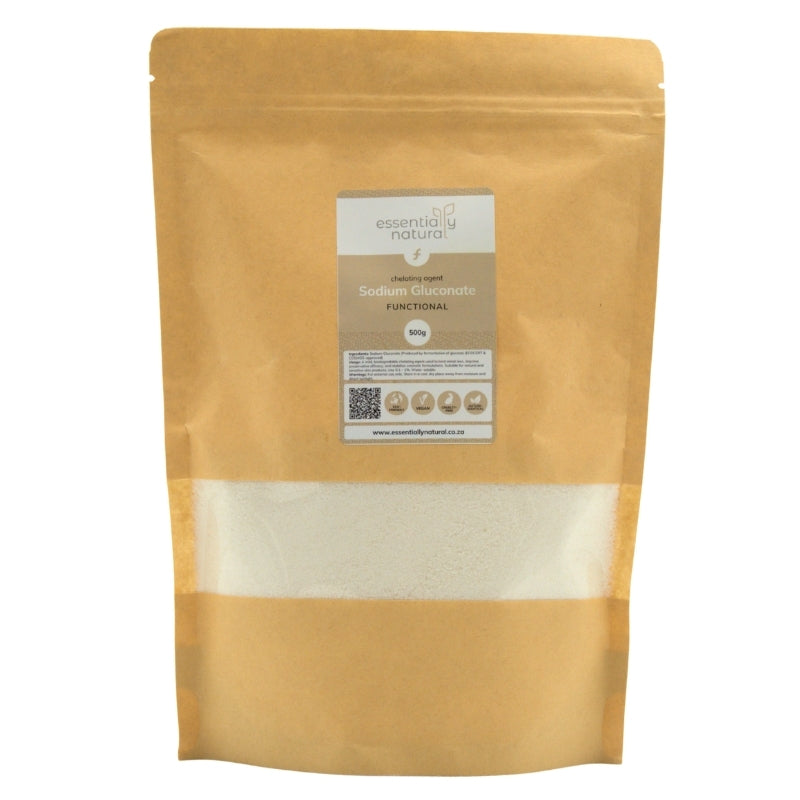
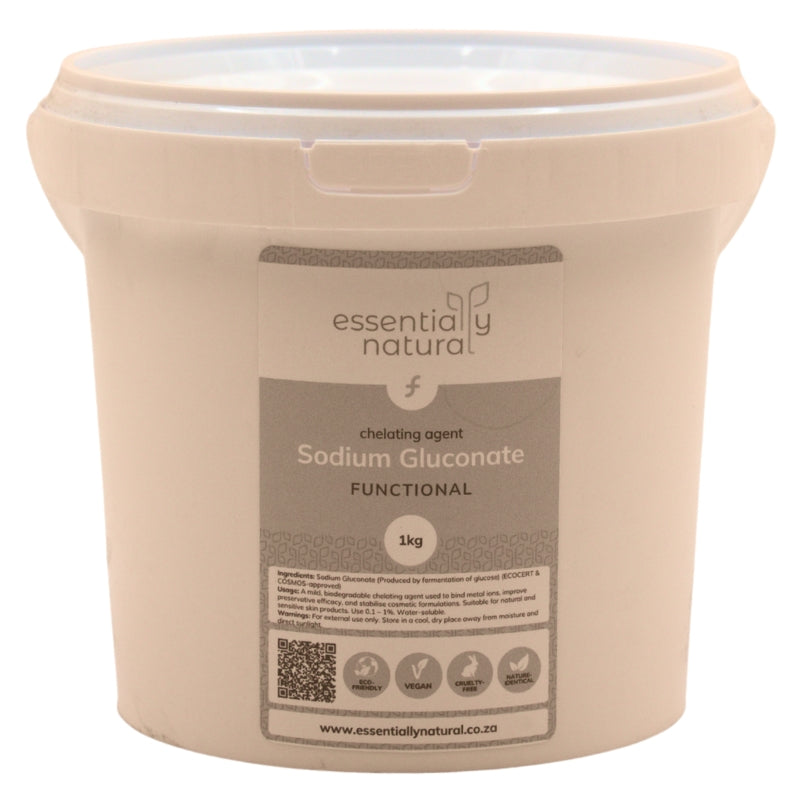
Sodium Gluconate is a biodegradable, fermentation-derived chelating agent that helps water-based cosmetic formulas remain stable, consistent and attractive over time. It binds trace metal ions that can contribute to oxidation, discolouration, unwanted odour changes or reduced ingredient performance. Its water-soluble powder format makes it a practical addition to cleansers, toners, serums, lotions and formulas made with hard water or mineral-rich botanical waters.
♡ Why we love it: We choose to offer Sodium Gluconate because a small addition can make a meaningful difference to formula reliability. It is especially useful for makers who want an ECOCERT and COSMOS-approved chelator that works easily in the water phase.
Key properties
- INCI Name: Sodium Gluconate
- Ingredient: Sodium gluconate produced by fermentation of glucose
- Function: Chelating agent
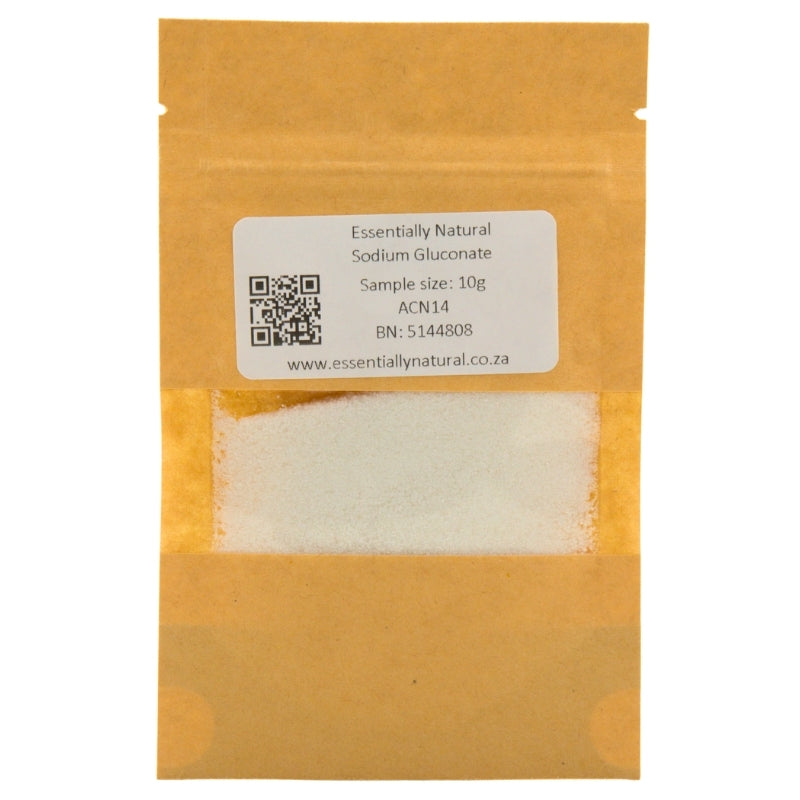
- Form: Powder
- Solubility: Water soluble
- Typical Usage Rate: 0.1-1%
- Biodegradable
- ECOCERT Approved
- COSMOS Approved
- Suitable For: Cleansers, toners, serums, lotions and other water-containing cosmetic formulations
- Storage: Store tightly sealed in a cool, dry place away from moisture
What it's used for
- Binding trace metal ions in water-based formulas
- Helping reduce oxidation-related discolouration and unwanted odour changes
- Supporting the performance of suitable preservative systems
- Improving consistency in cleansers, lotions, serums and toners
- Formulas made with hard water
- Products containing mineral-rich botanical waters
- Supporting oxidation-sensitive ingredients
Who it's for
- DIY and small-batch formulators making water-based products
- Formulas prone to colour, aroma or stability changes over time
- Cleansers where water hardness can affect foam or clarity
- Makers looking for a biodegradable, ECOCERT and COSMOS-approved chelator
- Products containing botanical waters, minerals or oxidation-sensitive ingredients
- Use as a standalone preservative
- Oil-only formulas where the powder cannot dissolve
- Use as a finished skincare product
This Product Is For:
This Product Is Not For:
How to use
- As a Water-Phase Ingredient: Add to the water phase and mix until fully dissolved.
- Typical Use Level: Use at 0.1-1% of the total formula, depending on the product and stability requirements.
- With Hard Water or Botanical Waters: Include in the water phase to help bind trace minerals that could affect the finished product.
- With Preservatives: Use as part of the wider formulation to support, but not replace, a suitable preservative system.
- Processing Tip: Dissolve completely before combining the water and oil phases or adding heat-sensitive ingredients.
- pH Tip: Check and adjust the final product pH where required, particularly when using acids, preservatives or pH-dependent actives.
- Testing Tip: Assess the finished formula for stability and preservation before scaling or sale.
Safety instructions
- For cosmetic formulation use only
- Do not ingest
- Avoid inhaling the powder or creating airborne dust
- Avoid contact with eyes
- Rinse thoroughly with water if eye contact occurs
- Patch test the completed product before wider use
- Store tightly sealed away from moisture
- Keep out of reach of children and pets
Faqs
Q: Does Sodium Gluconate replace a preservative?
A: No. It can support preservative performance by binding trace metals, but water-containing products still require an appropriate preservation system.
Q: When is Sodium Gluconate particularly useful?
A: It is especially useful in formulas made with hard water, botanical waters, minerals or ingredients that are sensitive to oxidation.
Q: How is it different from Sodium Phytate?
A: Both are water-soluble chelators used to bind trace metals, but they are different ingredients with their own formulation and compatibility profiles.
Q: Is it still useful when using distilled water?
A: Yes. Distilled water reduces mineral content, but chelation can still help in complex formulas containing botanical waters, minerals or certain active ingredients.
Q: Does it dissolve directly in oil?
A: No. Sodium Gluconate is water soluble and should be dissolved in the water phase.




Recently viewed
Related Reads
-

Chelation – Is your water tainted?
Sometimes chelating agents are necessary. In these circumstances, if a chelating agent is not used, some problems could arise.
Chelation – Is your water tainted?
Sometimes chelating agents are necessary. In these circumstances, if a chelating agent is not used, some problems could arise.
-

The Science Behind Bond Repair: How Hydrolyzed ...
Learn about the power of bond repair with hydrolyzed proteins, targeting hair at the molecular level to restore strength, shine, and manageability for even the most damaged strands.
The Science Behind Bond Repair: How Hydrolyzed ...
Learn about the power of bond repair with hydrolyzed proteins, targeting hair at the molecular level to restore strength, shine, and manageability for even the most damaged strands.
-

Liquorice Root: An Ancient Herbal Remedy in Mod...
Explore the powerful benefits of Liquorice Root for your skin—this ancient remedy brightens, soothes, and protects, making it a must-have ingredient for a radiant, even complexion.
Liquorice Root: An Ancient Herbal Remedy in Mod...
Explore the powerful benefits of Liquorice Root for your skin—this ancient remedy brightens, soothes, and protects, making it a must-have ingredient for a radiant, even complexion.


