
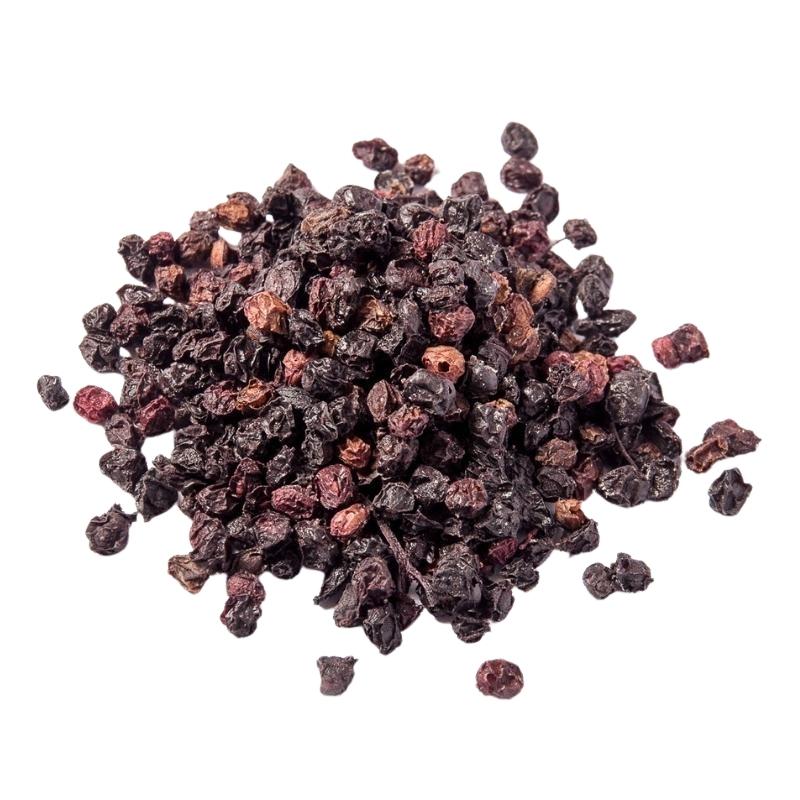
Elderberries (Sambucus nigra) - Food Grade Bulk
Elderberries (Sambucus nigra) - Food Grade Bulk
1 in stock — ready to ship
Couldn't load pickup availability
Elderberries are dried whole Sambucus nigra berries, used mainly in simmered preparations such as decoctions, syrups, cordials, jams, compotes and berry-forward kitchen projects. They have a deep natural colour and tangy, fruity character that develops well with heat. This bulk format suits repeat-use kitchens, tea blenders and small-batch makers who want a dependable dried botanical ingredient on hand. These are dried berries for prepared applications and are not intended as a ready-to-eat snack fruit.
♡ Why we love it: Elderberries are wonderfully versatile for seasonal kitchen projects, tea blending and syrup making. The bulk format is practical for repeat batches where colour, flavour and consistency matter.
Key properties
- Botanical Name: Sambucus nigra
- Plant Part: Berry
- Form: Dried whole berries
- Country Of Origin: Portugal
- Vegan Friendly: Yes
- Flavour Profile: Tangy, fruity and berry-like after simmering
- Colour: Deep natural berry colour
- Profile: Traditional seasonal kitchen and botanical syrup ingredient
- Suitable For: Decoctions, Syrups, Cordials, Jams, Compotes, Simmered Tea Blends, Strained Extracts And Bulk Kitchen Projects
- Storage: Store sealed in a cool, dry place away from light, moisture and strong odours
What it's used for
- Simmered berry decoctions
- Elderberry syrups and cordials
- Jams, compotes and berry-forward kitchen recipes
- Seasonal tea and kitchen blends
- Infused spirits for berry-style projects
- Strained botanical extracts for suitable formulation work
- Repeat-use kitchen and small-batch production
Who it's for
- Tea blenders working with simmered botanical ingredients
- Kitchens making syrups, cordials and preserves
- Small-batch makers producing seasonal berry preparations
- Refill-style businesses wanting a dependable dried berry ingredient
- Makers who can simmer and strain properly before use
- Ready-to-eat snacking straight from the bag
- Quick steep-only preparations that skip simmering
- Projects where deep natural colour could be a drawback
- Use without proper heating and straining
- People wanting a fresh berry product
- Use as a substitute for professional care for colds, flu, infections or immune conditions
This Product Is For:
This Product Is Not For:
How to use
- As a Decoction: Add 1-2 teaspoons berries to 500 ml water.
- Decoction Method: Bring to the boil, then simmer for 10-15 minutes before straining.
- As a Syrup Base: Prepare a decoction, strain very well, then sweeten and refrigerate.
- As a Cordial Base: Make a stronger simmered preparation, then adjust with sweetener and citrus to taste.
- As a Blend Ingredient: Combine with compatible botanicals in tea, simmer-pot or kitchen blend projects.
- Processing Tip: For larger batches, weigh your berries before simmering and use fine filtration to reduce sediment.
- Stain Tip: Protect light-coloured surfaces and rinse tools promptly after use.
Safety instructions
- Use in cooked or heated preparations
- Do not eat straight from the bag as a dried snack
- Strain well before use
- Keep away from light-coloured fabrics and porous surfaces, as the natural pigments may stain
- Consult a healthcare professional before use if pregnant, breastfeeding, taking medication or managing a medical condition
- Use prepared syrups and cordials promptly and store refrigerated
- Keep out of reach of children and pets
- Discontinue use if digestive upset, allergy or any adverse reaction occurs
Faqs
Q: Do elderberries need to be heated before use?
A: Yes, they are typically used in simmered preparations such as decoctions and syrups rather than quick infusions.
Q: Are these ready to eat as a dried snack?
A: No, this product is better suited to prepared applications such as simmering, straining and blending.
Q: Will elderberries stain utensils or cloth?
A: They can. Their natural pigments are strong, so rinse tools promptly and protect porous or light surfaces.
Q: What can I make with dried elderberries?
A: They can be used for decoctions, syrups, cordials, jams, compotes, simmered tea blends and strained botanical
extracts.
About These Botanicals
This product is grown in an organic and regenerative fashion with as minimal use of insecticides, pesticides, herbicides and fungicides as possible, in certified organic fertilizer. The product is sourced food grade. It is not certified organic. Suitable for Kosher, Halaal and Hindi diets.


Recently viewed
Related Reads
-

Top 5 Herbs that fight infection
Find out which herbs help fight infection - avoiding antibiotics that wipe out your gut.
Top 5 Herbs that fight infection
Find out which herbs help fight infection - avoiding antibiotics that wipe out your gut.
-

Getting Over Winter Illness, Low White Blood Ce...
Our resident blogger shares her story, plus natural remedies for increasing WBC levels
Getting Over Winter Illness, Low White Blood Ce...
Our resident blogger shares her story, plus natural remedies for increasing WBC levels
-

5 Ingredient DIY Marshmallows that Soothes flu ...
Have you had a real Marshmallow before? Learn how to make the original, moist and fresh Marshmallow that tastes delicious but also can help with a sore throat!
5 Ingredient DIY Marshmallows that Soothes flu ...
Have you had a real Marshmallow before? Learn how to make the original, moist and fresh Marshmallow that tastes delicious but also can help with a sore throat!


