

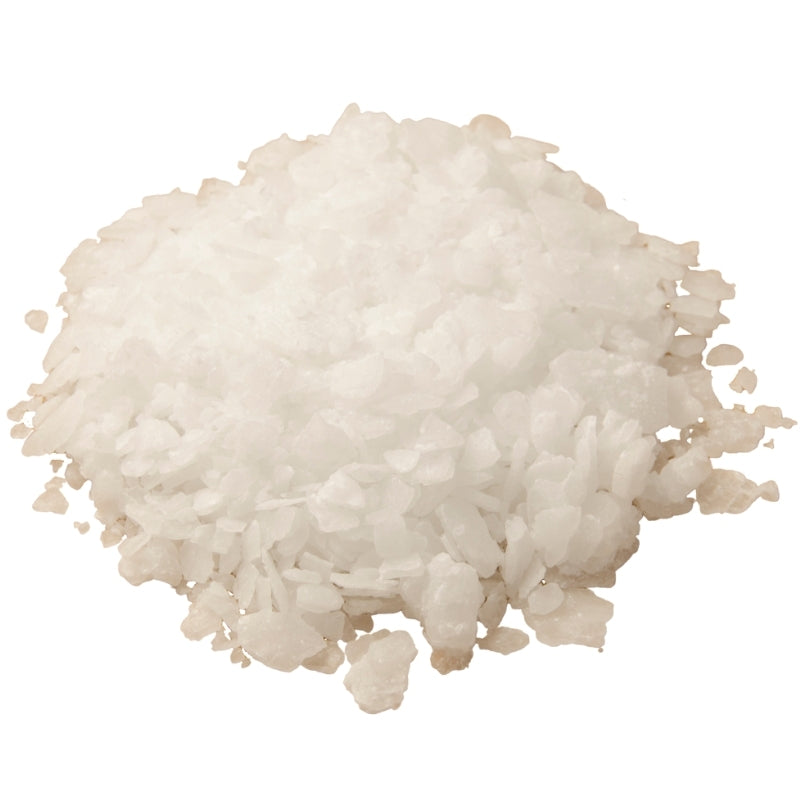


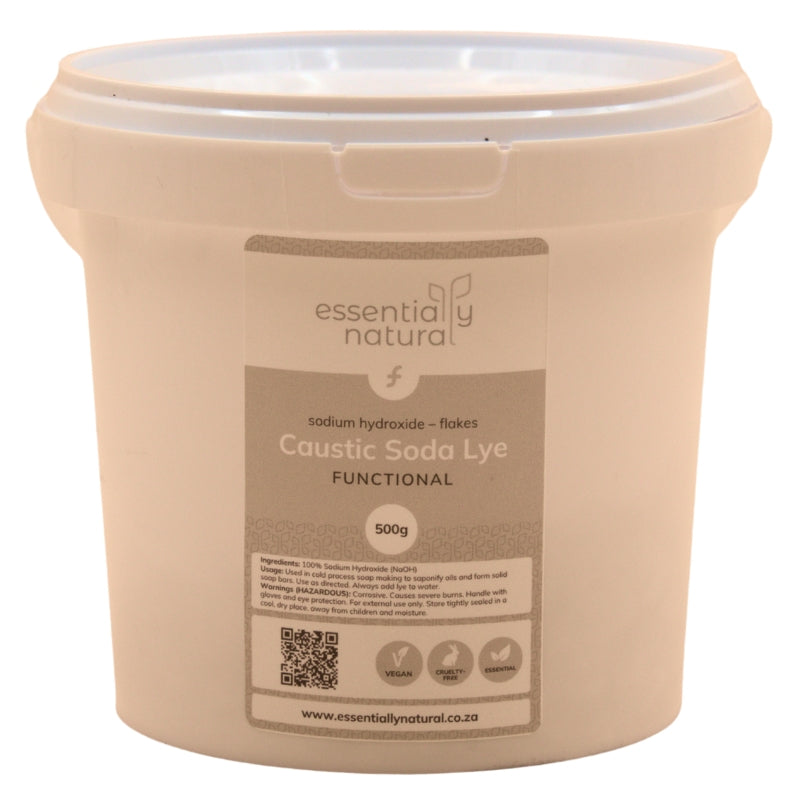
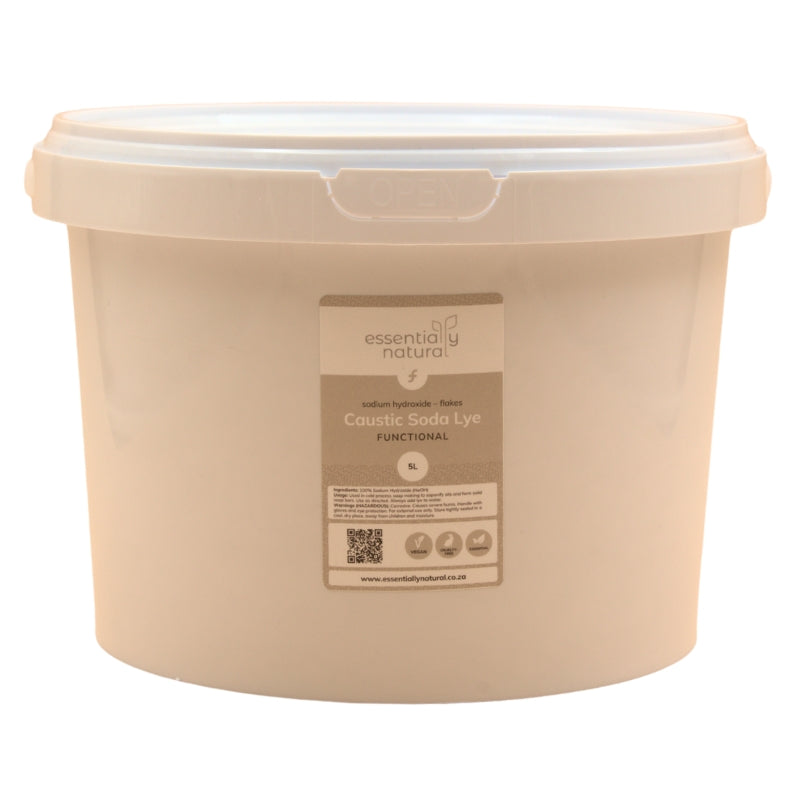
Caustic Soda Lye (Sodium Hydroxide) - Essentially Natural
Caustic Soda Lye (Sodium Hydroxide) - Essentially Natural
5 in stock — ready to ship.
Couldn't load pickup availability
Essentially Natural Caustic Soda Lye is sodium hydroxide, a highly caustic alkali used in soap making to trigger saponification when combined with oils and fats. It is a raw process ingredient rather than a finished cosmetic component, and it is essential for making true hard soap by cold or hot process methods. Used correctly in a tested soap recipe, the active lye is consumed during saponification. This is a specialist soap-making material and must be handled with strict safety procedures.
♡ Why we love it: Caustic Soda Lye is a core soap-making ingredient for makers who want to create true handmade soap from scratch. It is a specialist raw material, but an essential one for serious soap craft.
Key properties
- Ingredient: Sodium Hydroxide, NaOH
- Function: Alkali for soap making
- Form: Caustic solid
- Profile: Specialist process ingredient for saponification
- Suitable For: Cold Process Soap, Hot Process Soap And True Hard Soap Made With Oils And Fats
- Storage: Store tightly sealed, dry and away from moisture, sunlight and heat
What it's used for
- Cold process soap making
- Hot process soap making
- Producing hard soap through saponification with oils and fats
- Tested soap recipes that require sodium hydroxide
- Specialist soap craft
- Accurate lye calculation for oil-based soap formulas
Who it's for
- Soap makers following correct lye-handling procedures
- Makers using verified soap recipes and accurate weighing
- Cold and hot process soap projects
- Experienced or well-prepared beginners who understand caustic material handling
- Cosmetic leave-on products
- Direct skin application
- Internal use
- Food use
- Children or unsupervised use
- Anyone unable to follow strict safety procedures
- Guesswork soap recipes without accurate lye calculation
This Product Is For:
This Product Is Not For:
How to use
- As a Soap Making Ingredient: Weigh accurately according to a tested soap recipe and calculate lye amounts correctly for the oils used.
- Mixing Rule: Always add lye to water, never water to lye.
- Ventilation Tip: Mix in a well-ventilated area.
- Equipment Tip: Use suitable lye-safe containers and utensils.
- Cure Tip: Allow soap to cure fully according to the chosen method before use.
- Safety Tip: Keep vinegar myths out of emergency handling and flush skin or eyes with plenty of water if exposed.
Safety instructions
- Danger: causes severe burns
- Highly caustic material
- Always wear protective gloves, eye protection and protective clothing
- Avoid skin contact, eye contact, inhalation and ingestion
- Mix in a well-ventilated area
- Always add lye to water, never water to lye
- Keep away from children and pets
- If skin or eyes are contacted, flush with water for at least 15 minutes and seek medical attention
- Store tightly sealed, dry and away from moisture, sunlight and heat
- Not suitable for food use
- Do not store near acids or incompatible materials
Faqs
Q: Why is lye needed for soap?
A: It is required to convert oils into soap through saponification.
Q: Can true soap be made without lye?
A: No, true soap made from oils and fats requires an alkali such as sodium hydroxide.
Q: Is finished soap harsh because it uses lye?
A: When formulated correctly and fully cured, the lye is consumed during saponification and the finished soap should
be suitable for normal use.
Q: Is Caustic Soda Lye safe to handle casually?
A: No, it is highly caustic and must be handled with full protective equipment and strict safety procedures.
Related Video Content



Recently viewed
Related Reads
-

Soap Making 101
An introduction to the joy of soap making, plus recipes!
Soap Making 101
An introduction to the joy of soap making, plus recipes!
-

The Great Spring Cleaning Blog
Jam-packed with natural DIY recipes for every corner of your home!
The Great Spring Cleaning Blog
Jam-packed with natural DIY recipes for every corner of your home!
-

What Archetype Are You? Use Your Archetype To D...
Sometimes the hardest part is just figuring out where to start - so why not let your archetype guide you? :)
What Archetype Are You? Use Your Archetype To D...
Sometimes the hardest part is just figuring out where to start - so why not let your archetype guide you? :)
-

Tea Tree & Shea Healing Soap
The ultimate skin saviour, our Tea Tree & Shea Healing Soap recipe – packed with nourishing shea butter and healing tea tree oil, this customisable soap bar is perfect for...
Tea Tree & Shea Healing Soap
The ultimate skin saviour, our Tea Tree & Shea Healing Soap recipe – packed with nourishing shea butter and healing tea tree oil, this customisable soap bar is perfect for...


