What Is Batana Oil, and Does It Live Up to the Hair-Growth Claims?
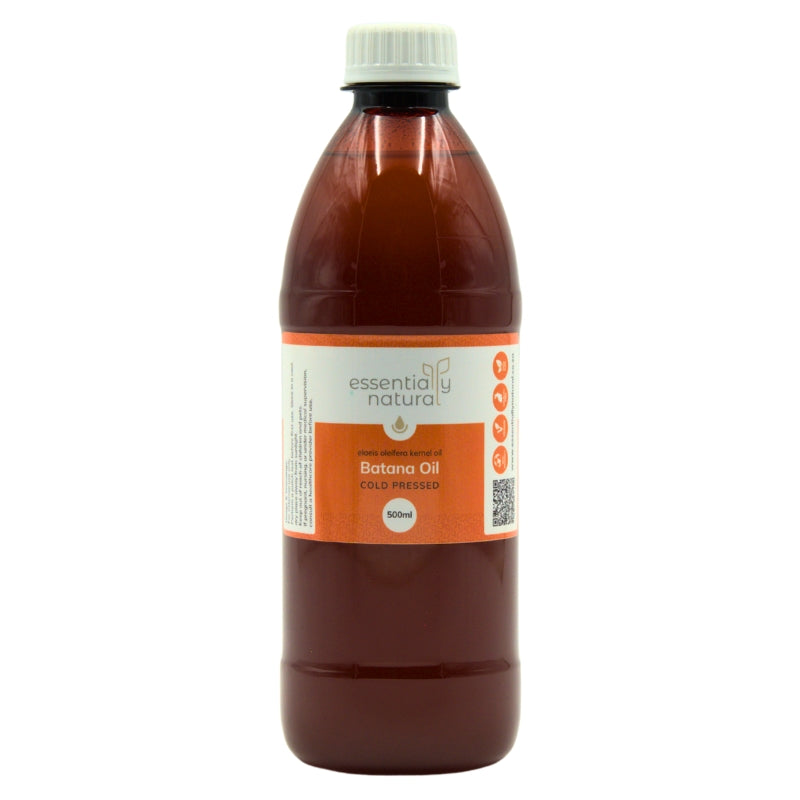
Essentially NaturalBatana Oil has gone from a traditional Honduran hair oil to a TikTok star, often promoted for thinning hair, dry ends and super hair growth. In some ways, it feels like the next logical step from the viral Castor Oil: it is less sticky, spreads more easily and has a distinctive earthy aroma. The downside is that Batana Oil is usually more expensive - and, like Castor Oil, it does not quite live up to all the miracle claims surrounding it.
While both Batana Oil and Castor Oil are excellent at what they actually do, neither has strong evidence showing that it can stimulate new follicles or significantly increase the biological rate of hair growth.
What Batana Oil does more realistically is condition the hair. It can help improve softness and smoothness while reducing friction and breakage. This does not make the hair grow faster, but it may support longer-looking hair in another way: by helping you retain more of the length you have already grown.
What Is Batana Oil?
Batana oil comes from Elaeis oleifera, the American oil palm. It is closely associated with the Miskito people of the La Mosquitia region of Honduras, where palm oils have traditionally been used in hair and skin care.
Although Batana comes from a species of palm, it's not normally produced through the same large-scale plantation system associated with standard, unsustainable palm oil. Its sustainability still depends on how and where it is sourced, so transparent sourcing remains important.
Because Batana Oil can be produced in different ways, its appearance and character can vary. Traditional preparation may involve heating the palm fruit and processing it by hand, while most modern products are cold-pressed.
As a minimally processed natural oil, its colour, scent and consistency may vary slightly from batch to batch. It is generally lighter in colour than standard Castor Oil and may carry a nutty, earthy or slightly smoky aroma, particularly when unrefined. This is worth considering when formulating products where fragrance and overall sensory experience are important.
Batana oil may also thicken or partly solidify in cooler weather. This is completely normal and does not necessarily mean that the oil has spoiled. Gently warming the closed container or rubbing a small amount between your hands should soften it again.
What Is Batana Oil Used For?
Batana Oil is mainly used as a rich conditioning oil for dry, coarse, curly or textured hair. It can be applied before shampooing, smoothed over dry ends or included in hair masks and oil blends. On the skin, it's commonly used to soften and soothe dry areas such as the cuticles, elbows, knees and heels – similar to our other emollients.
The oil lubricates the outside of the hair fibre, helping it feel smoother and reducing friction during combing. When hair breaks less, more length is retained. This can look like faster growth, even when the follicle’s actual growth rate has not changed.
This distinction is important because processed or frequently styled hair can lose length through breakage, which is often mistaken for slow growth. Batana Oil may help improve the condition and appearance of the hair you already have, but there is currently no good human evidence showing that it activates dormant follicles, reverses hair loss or makes new hair grow.
How To Use Batana Oil On Hair:
Used on its own, Batana Oil generally works best as a rinse-out treatment or in very small amounts on dry ends. It can also be used as an ingredient in formulas for products like conditioners, hair masks, leave-in conditioners, serums and styling balms, where it is easier to distribute without making the hair feel overly oily.
As a pre-shampoo treatment
Warm a small amount between your palms and smooth it through the mid-lengths and ends. Lightly coat the hair rather than saturating it. Leave it on for around 20 to 30 minutes, then shampoo. A heavy application may require a second wash.
You can apply it to dry or slightly damp hair. Concentrating on the lengths and ends is usually more useful than covering the scalp, particularly when dryness and breakage are the main concerns.
As a leave-in oil
Rub a tiny amount between your hands until only a light film remains, then smooth it over the driest ends. Fine hair can become flat or greasy quickly, so start with less than you think you need.
Coarse, tightly curled or very dry hair may benefit from slightly more, but Batana is still a rich oil. Adding too much will not necessarily improve the result and may simply make the hair harder to wash.
As an ingredient in haircare products
Batana oil can also be used as the nourishing oil component in a range of haircare formulations, including:
- Rinse-out conditioners, where it can help improve softness, slip and manageability.
- Deep-conditioning masks, particularly those intended for dry, coarse, textured or chemically processed hair.
- Leave-in conditioners and detangling creams, where a smaller amount can provide conditioning without the heaviness of applying the pure oil directly.
- Hair serums and finishing oils, designed to smooth dry ends and add shine.
- Styling balms, curl creams and hair butters, where it can contribute richness and help reduce the rough feel of dry hair.
- Pre-shampoo oil blends, combined with lighter oils to make it easier to spread.
A formulated leave-in conditioner may be a better option for fine hair than using neat Batana oil, as the oil is dispersed through the product and applied in a much lighter layer.
Batana oil is not water-soluble, so it should not simply be stirred into a water-based conditioner or spray. Water-and-oil products require a suitable emulsifier to keep the formula stable, as well as a broad-spectrum preservative. DIYing a hair product may be as simple as looking up a cream DIY with Shea Butter, and simply switching out the liquid oil (commonly Sweet Almond Oil) with Batana – while reducing any humectants (like vegetable glycerine) but still keeping other ingredients that are great for hair – like Panthenol and Guar Hydroxypropyltrimonium Chloride.
On the scalp
Scalp use is optional. Applying Batana Oil directly to the scalp does not add to the conditioning effects of Batana.
Those who enjoy scalp oiling can apply it sparingly and wash it out well. Stop using it on the scalp if it makes itching, flaking or irritation worse, and consult a healthcare provider if scalp symptoms persist.
Once a week is a sensible starting point when using pure Batana Oil as a treatment. Dry or coarse hair may tolerate it more often, while fine or oily hair may need it only occasionally. Leave-in conditioners and other formulated products containing Batana Oil can be used according to their individual directions, as the amount of oil in each formula will vary. Adjust your routine according to softness, build-up and how easily your hair becomes weighed down.
Can Batana Oil Be Used on Skin?
Yes. Batana can be used as a rich body oil or added to creams and body butters. It is particularly suited to dry areas like the hands, feet, elbows and knees.
Those with easily congested or acne-prone skin should use it cautiously on the face. Patch test the oil first, avoid the eye area and discontinue use if irritation develops.
Batana Oil is a cosmetic ingredient, not a treatment for eczema, acne, dermatitis or scalp conditions. Consult a healthcare provider about persistent skin, scalp or medical concerns.
Batana Oil vs Castor Oil: An Honest Comparison
Both oils can make dry hair feel more conditioned, but they are not interchangeable in texture or user experience.

Choose Batana Oil when you want a rich but more spreadable conditioning treatment and do not mind its stronger smell or higher price. It may be particularly appealing for coarse, textured or weathered hair that needs help with softness and manageability.
Choose Castor Oil when you want an economical, very heavy oil for sealing the ends or mixing with lighter oils. Its thickness can be useful in blends, but it may feel sticky when used by itself.
For proven regrowth, neither is the winner. Both can help hair look glossier and feel better conditioned, but that does not impact the hair-growth cycle.
If hair loss is sudden, patchy or continuing - or the scalp is painful, inflamed or heavily flaking - consult a healthcare provider rather than relying on an oil.