Why Does Your Hair Go Frizzy? The Science Behind Smooth, Healthy Hair
Cayla MandeanIt's wash day again.
You carefully cleanse your hair, apply your favourite conditioner, detangle with patience, finish with your styling products, diffuse (or air dry), and finally admire the soft, defined curls staring back at you in the mirror.
Then you step outside into the cold winter air.
Within minutes, your smooth curls seem to have a mind of their own. A soft halo of fuzz appears, your curl definition disappears, and suddenly all the effort you put into wash day feels wasted.
I assumed I was doing something wrong. Maybe it was simply my curly hair type. Maybe I needed a different leave-in conditioner. Perhaps my curls simply didn't want to cooperate.
But the real explanation isn't your styling routine.
It's science.
What is happening to the hair fibre itself? How does winter affect the structure and physical properties of your hair? Once you understand what's happening beneath the surface, caring for your hair suddenly makes a lot more sense.
Frizz vs Flyaways: Understanding the Difference
Before diving into the science, it's worth clearing up one common misconception.
Although they're often used interchangeably, frizz and flyaways aren't the same thing.
Flyaways are individual hairs that stick out from the rest of the hairstyle. They're often shorter hairs around the hairline or crown that are still growing, although broken hairs can also contribute. In many cases, flyaways are simply a sign of healthy new hair growth.
Frizz, on the other hand, occurs when larger groups of hair fibres lose their alignment. Instead of remaining bundled together, individual strands separate, creating a rough, fluffy appearance and reducing smoothness.
Most people deal with one of these at some point, whether their hair is straight, wavy, or curly.
Understanding the difference matters because this article focuses on frizz.
What is Human Hair Made Of?
To understand why cold, dry winter air affects your hair, it helps to first understand how each hair fibre is built.
Every strand consists of three distinct layers:
- The cuticle – the protective outer layer made up of overlapping, scale-like cells.
- The cortex – the middle layer containing structural proteins (primarily keratin), pigment and most of the hair's water.
- The medulla – the central core, which may be absent in finer hairs.
Of these three layers, the cuticle is especially important when it comes to frizz.
When the cuticle lies flat and tight, it creates a smooth protective surface that:
- Reflects light more efficiently, making hair appear shinier.
- Reduces friction between neighbouring hair fibres.
- Helps retain moisture within the cortex.
- Improves softness and manageability.
In other words, the condition of your cuticle plays a big role in whether your hair looks smooth or frizzy.
Humidity Isn't the Only Cause of Frizz
Humidity often gets all the blame for frizz, but it's only part of the story.
In humid weather, water vapour enters the cortex, causing different parts of the hair fibre to swell at slightly different rates. This disrupts the temporary hydrogen bonds that help hold your hairstyle in place.
Winter frizz often happens for different reasons.
Unlike living skin, the hair shaft is biologically inactive and cannot regulate its own moisture balance or repair itself.
Hair is hygroscopic, meaning it continuously absorbs and releases water in response to the surrounding environment. However, as mentioned before, hair cannot actively regulate its own water content. Instead, its moisture level is determined by the balance between the surrounding humidity and the condition of the hair fibre itself.
During winter, indoor heating and cold, low-humidity air create dry conditions that encourage water to gradually diffuse from the hair fibre into the surrounding environment. As the cortex loses water, the hair becomes less flexible and more prone to mechanical damage.
At the same time, existing damage to the cuticle, the hair’s protective outer layer, often becomes more noticeable under dry winter conditions. If the cuticle has already been weakened by weathering, heat styling or chemical treatments, it may become rougher, increasing friction between neighbouring hair fibres.
Different environmental conditions.
Different physical mechanisms.
The same frustrating result: frizz.
Interestingly… In winter, one of the major contributors to that frizz is a roughened cuticle.
A roughened cuticle also increases friction between neighbouring hairs and allows water to move into and out of the fibre more readily. This can create a cycle in which dry, less flexible hair is more vulnerable to friction and wear, while an already damaged cuticle makes it harder for hair to maintain a smooth, conditioned feel.
As hydration decreases:
- Hair develops a rougher surface and dull appearance.
- Hair fibres become stiffer and less elastic.
- Curl definition becomes less consistent.
- Static electricity builds more easily.
- Water moves more readily between the cortex and the surrounding environment.
- Hair fibres catch against one another, increasing friction.
Collectively, these changes increase friction, reduce shine and make hair more susceptible to tangling and frizz.
Static electricity can also be a major contributor to frizz in winter.
Every time you brush your hair, pull off a beanie or rub against a woollen scarf, friction transfers tiny electrical charges onto your hair. In dry winter air, these charges remain on the hair. Because hairs carrying the same electrical charge repel one another, they push apart instead of lying smoothly together, encouraging that halo of winter frizz.
Why Curly Hair Is More Vulnerable to Frizz
While everyone experiences seasonal effects on their hair, curly hair faces additional challenges.
The spiral shape of curly hair makes it more difficult for the scalp's natural oils (sebum) to travel from the roots to the ends. As a result, the mid-lengths and ends receive less natural lubrication than straight hair, leaving them more susceptible to dryness.
Curly fibres also contain numerous bends and twists. These curved regions experience greater mechanical stress during washing, brushing and styling, making the cuticle more vulnerable to gradual wear and lifting over time.
This combination of reduced natural conditioning and increased cuticle stress means that even modest moisture loss during winter can noticeably increase frizz, reduce curl definition and leave curls feeling rougher and less resilient.
The Science Behind Smoother Hair
Now that we understand what causes winter frizz, the obvious question becomes:
Is adding oil the answer?
Not entirely.
Healthy hair relies on a balance of water, conditioning ingredients and protective lipids.
Adequate water content helps maintain the cortex's flexibility, but it also needs to be retained within the fibre. That's where modern conditioning formulations play an important role.
Different ingredients work in different ways.
Humectants, such as glycerine, help bind water and support hydration, especially when balanced with conditioning and emollient ingredients.
Conditioning agents attach to the negatively charged surface of damaged hair, forming an ultra-thin lubricating layer that smooths the cuticle, reduces friction and static, and improves softness, shine and manageability.
Finally, emollients and plant oils help soften the feel of the hair, improve slip and reduce moisture loss. While oils can't replace lost water, they are highly effective at helping retain hydration that's already present.
Together, these ingredients help create a smoother cuticle surface, allowing hair fibres to glide past one another instead of catching, separating and causing frizz.
With that in mind, I experimented with a nourishing hair conditioner that is designed to help improve hydration, reduce static and smooth the hair fibre without weighing it down.
The result is hair that feels softer, looks healthier and is better equipped to withstand the effects of different weather on your hair.
Tame-Frizz DIY Leave-in Hair Conditioner
Phase A
25% Distilled Water (Acts as the base of the formulation)
1% Guar Hydroxypropyltrimonium Chloride (Provides conditioning and helps reduce static frizz)
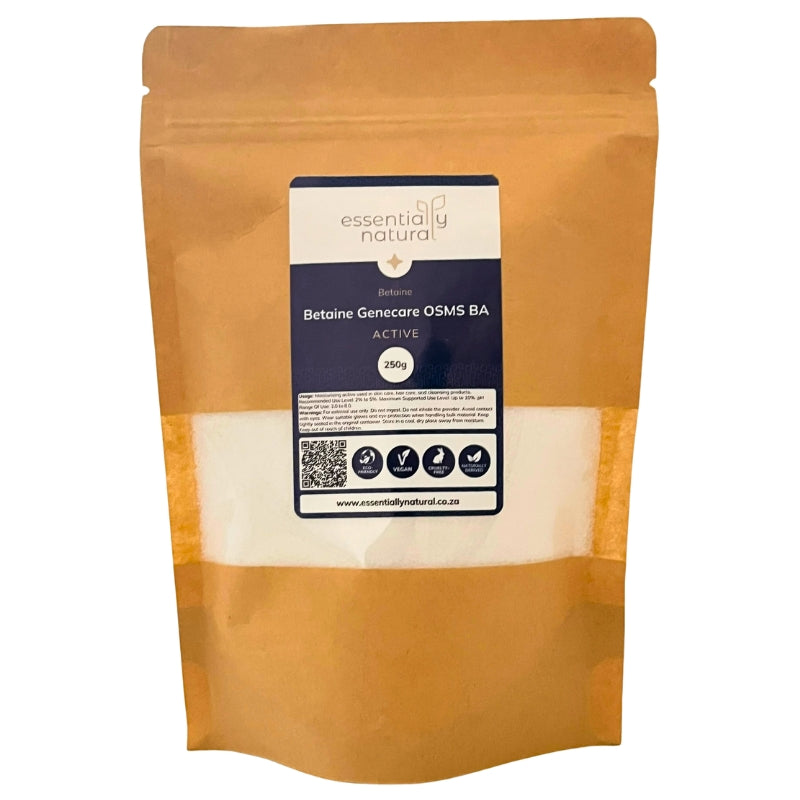
3% Betaine Genencare OSMS BA (A humectant that helps attract and retain moisture while improving hair softness.)
50% Horsetail Infusion (Rich in silica and antioxidants, traditionally used to help support stronger, healthier hair.)
Phase B
3% Vegetable Glycerine (A humectant that helps draw moisture into the hair fibre.)
0.40% Hydroxyethyl Cellulose (Thickens the formula and improves application.)
Phase C
4% Cetyl Alcohol (A fatty alcohol that softens hair and improves slip.)
5.50% Montanov 68 MB (An emulsifier that creates a rich, conditioning cream.)
1% Shea Butter (Helps soften the hair and reduce moisture loss.)
3% Ghee (Helps improve slip, reduce moisture loss and gives a smoother, shinier finish)
1% Broccoli Seed Oil (Adds shine, smooths the cuticle and offers a natural silicone-like feel.)
1% Pumpkin Seed Oil (Nourishes and helps improve softness and manageability.)
Phase D
0.90% Geogard 221 (Natural preservative)
0.50% Rosemary (Rosmarinus officinalis) Essential Oil (Adds a fresh herbal aroma and supports healthy hair and scalp.)
0.40% Vitamin E Oil (Provides antioxidant protection.)
0.30% Alpha-Bisabolol 95% (Helps soothe and calm the scalp while supporting conditioning.)
Method
- Slowly sprinkle the Guar Hydroxypropyltrimonium Chloride into the water and Horsetail Infusion while mixing to avoid clumping. Continue mixing until fully dispersed, then add the Betaine Genencare and stir until homogeneous.
- Premix the ingredients in Phase B to form a smooth slurry. Add the slurry to Phase A, little by little while stirring continuously until the Hydroxyethyl Cellulose is fully hydrated and a smooth, homogeneous gel forms.
- Heat Phase A/B to 75–80°C.
- In a separate beaker, combine the ingredients in Phase C and heat to 75–80°C until completely melted and combined.
- Add Phase C to Phase A/B and mix using a stick blender until a smooth, glossy, homogeneous emulsion forms.
- Continue stirring under low shear while cooling. Once the emulsion reaches below 40°C, add Phase D and mix until completely homogeneous.
- Continue cooling to below 25°C. Check and adjust the pH to 5.0–5.5 using a suitable pH adjuster.
- Allow the product to stand for 24 hours before evaluating viscosity and texture, as the emulsion will continue to develop during this time. Stir gently before filling into final packaging.
Usage: Apply a small amount to damp hair, focusing on mid-lengths and ends. Use sparingly on fine hair to avoid weighing it down. Avoid contact with eyes and do not use on broken or irritated skin.