
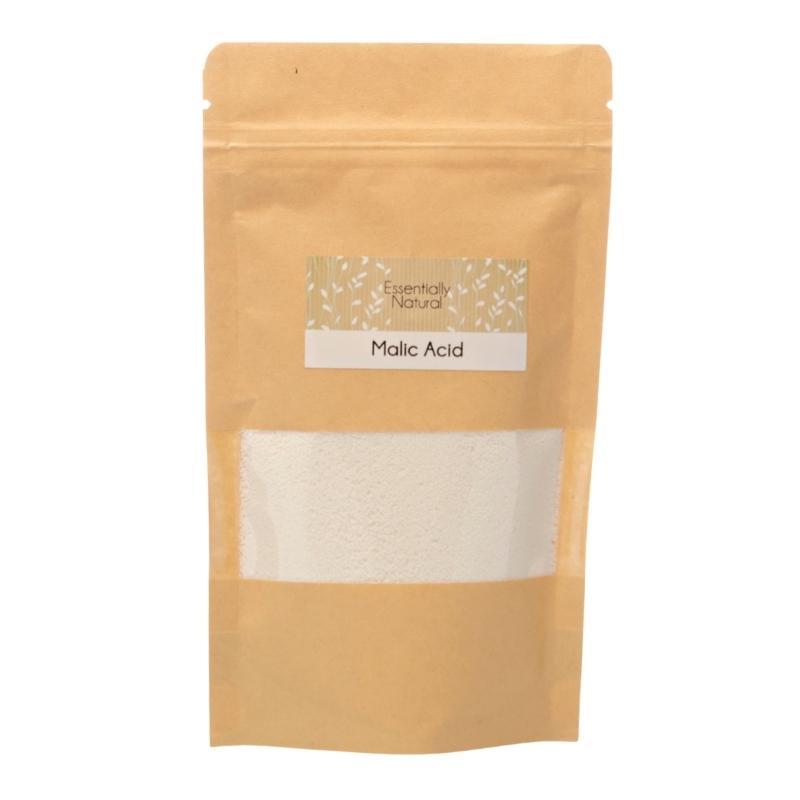
Malic Acid - Essentially Natural
Malic Acid - Essentially Natural
Restock in progress Stock may still be with our manufacturing team or arriving shortly. Orders usually ship within 1-3 working days.
Couldn't load pickup availability
Essentially Natural Malic Acid is L-Malic Acid, a water-soluble alpha hydroxy acid (AHA) primarily offered for skincare, haircare and personal care formulation. Its relatively larger molecular size gives it a more gradual surface action than some smaller AHAs, making it especially useful for milder exfoliating concepts while also contributing humectant properties and helping formulators adjust product pH. It works well in toners, serums, masks, lotions and haircare where controlled acidity, smoother-feeling skin or pH adjustment is wanted. It is also food safe for personal food use, although it is not certified Food Grade.
♡ Why we love it: We choose to offer L-Malic Acid because it gives formulators a versatile way to combine gentle AHA functionality with practical pH control in water-based products. It is particularly useful when a more measured exfoliating approach is preferred, while its food-safe status also gives it some additional versatility for appropriate personal-use applications.
Key properties
- INCI Name: Malic Acid
- Type: L-Malic Acid
- Function: AHA exfoliant, humectant and pH adjuster
- Form: Fine powder
- Solubility: Water soluble
- Phase: Water phase
- Suggested Cosmetic Usage Rate: 1-3%
- Suitable For: Cosmetic formulation and suitable personal food use
- Food Safety Note: Food safe for personal use, not certified Food Grade
- Storage: Keep well sealed and protected from moisture, sunlight and heat
What it's used for
- Gentle exfoliating toners, serums, masks and leave-on treatments
- Skin-smoothing formulas for dull-looking or uneven-feeling skin
- Products for congested or blemish-prone skin where mild exfoliation is wanted
- pH adjustment in lotions, shampoos and other water-based formulations
- Formulas combining AHAs with humectants such as glycerine or hyaluronic acid
- Haircare formulations where controlled acidity forms part of the product design
- Suitable personal food preparations where a recipe specifically calls for malic acid
- Adding tart acidity to appropriate personal-use food or beverage recipes
Who it's for
- Formulators wanting L-Malic Acid for mild AHA skincare concepts
- DIY makers comfortable measuring and controlling finished-product pH
- Water-based cosmetic formulations requiring an acidifier
- Skincare projects where gradual surface exfoliation is preferred
- Personal food applications where food-safe malic acid is suitable and certified Food Grade status is not required
- Anyone specifically requiring DL-Malic Acid
- Commercial food applications requiring certified Food Grade material
- Direct neat application to the skin
- Oil-only formulations where the acid cannot dissolve
This Product Is For:
This Product Is Not For:
How to use
- As an AHA in Water-Based Products: Dissolve into the water phase and typically use at 1-3%, depending on the product type and intended formulation.
- As a pH Adjuster: Add in small increments, mix thoroughly and re-test the finished pH after each addition.
- In Skincare: Incorporate into appropriately formulated toners, serums, masks, lotions and other water-based products where mild AHA activity is wanted.
- In Haircare: Use in the aqueous phase as part of pH adjustment and overall formula design.
- For Personal Food Use: Use only in suitable recipes or preparations where malic acid is appropriate. This product is food safe but is not certified Food Grade.
- Processing Tip: Pre-dissolving in the water phase helps ensure even incorporation.
- Processing Tip: Use accurate scales and reliable pH testing rather than judging acid strength by usage percentage alone.
- Skincare Tip: Introduce exfoliating products gradually and adjust frequency according to skin comfort.
Safety instructions
- Do not apply the raw powder directly to skin
- Avoid inhaling airborne powder during handling
- Avoid direct contact with eyes
- Rinse thoroughly with clean water if eye contact occurs
- Patch test completed cosmetic formulations before wider use
- Discontinue topical use if irritation occurs
- Exfoliating acid products can increase sun sensitivity, so appropriate daily sun protection is recommended
- Keep well sealed and store away from children, pets, moisture, sunlight and heat
Faqs
Q: Is this L-Malic Acid or DL-Malic Acid?
A: This product is L-Malic Acid. It is different from DL-Malic Acid, which contains both D- and L-forms.
Q: Is this Malic Acid Food Grade?
A: No. It is food safe and can be used in suitable personal food preparations, but it is not certified Food Grade.
Q: What is L-Malic Acid mainly used for?
A: It is primarily offered as a cosmetic formulation ingredient for gentle exfoliation, humectant support and pH
adjustment in water-based skincare and haircare.
Q: Is Malic Acid one of the gentler AHAs?
A: It is commonly chosen for milder exfoliating concepts because its larger molecular size gives it a more gradual
surface action than some smaller AHAs.
Q: Can Malic Acid be used with other actives?
A: Yes. It is often combined with humectants and other skincare ingredients, but the total acid load, compatibility
and final formula pH should always be considered.
Q: Why do I need to test pH when formulating with Malic Acid?
A: The finished pH affects both skin comfort and how an acid-containing formula behaves. Measuring pH allows you to
make controlled adjustments rather than relying on percentage alone.
Q: Can I use Malic Acid in hair products?
A: Yes. It can be incorporated into the water phase of shampoos and other suitable haircare formulations, particularly
where pH adjustment is required.
Q: Can I use it in food?
A: It can be used in suitable personal food applications because it is food safe. It should not be presented or relied
upon as certified Food Grade material for applications that specifically require that grade.


Recently viewed
Related Reads
-

The Importance of pH in Formulation
Learn all about pH, how it impacts formulations and how you can formulate to consider pH.
The Importance of pH in Formulation
Learn all about pH, how it impacts formulations and how you can formulate to consider pH.
-

Quick Guide To Solubility
Discussing the solubility of various ingredients - a key part of formulating.
Quick Guide To Solubility
Discussing the solubility of various ingredients - a key part of formulating.
-

Herbal Hair Serums & Mists
Learn how to make botanical hair mists and oil hair serums for the healthiest hair!
Herbal Hair Serums & Mists
Learn how to make botanical hair mists and oil hair serums for the healthiest hair!


