
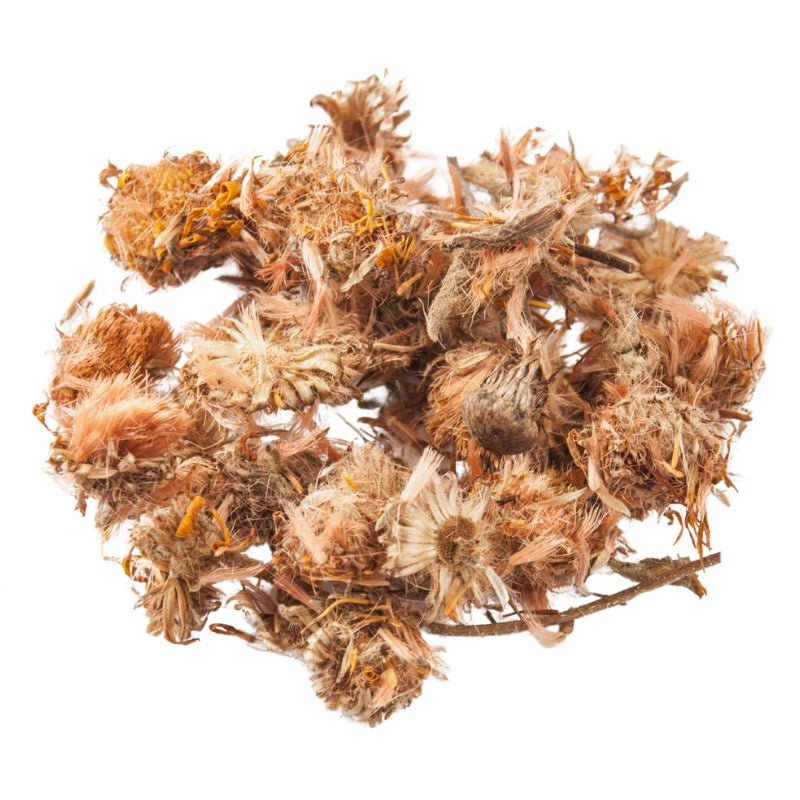
Arnica Flowers (Arnicae mexicana) - Food Grade Bulk
Arnica Flowers (Arnicae mexicana) - Food Grade Bulk
Couldn't load pickup availability
Arnica Flowers are dried, aromatic flowers traditionally used in topical herbal preparations for recovery-style routines. They are commonly infused into oils, alcohol-based liniments, and balms for use on unbroken skin. Arnica is widely used in massage and sports rub projects where comfort and a warming herbal feel are desired. This product is for external use only.
Key properties
- Botanical Name: Arnica mexicana
- Common Name: Arnica Flowers
- Form: Dried whole flowers
- Aroma Profile: Herbal, strongly aromatic
- Suitable For: Topical oils, liniments, compresses, balms, salves
- Ingredients: Dried arnica flowers
- Storage: Store sealed in a cool, dry place away from direct light and strong odours
What it’s used for
- Infuse into carrier oils for massage oils and balm bases
- Make topical tinctures or liniments for targeted rub-downs (external use only)
- Prepare compresses for bumps, bruises, and stiffness (intact skin only)
- Formulate salves and sports rubs for post-activity routines
This product is commonly used to:
Who it’s for
- Makers creating topical balms, salves, and massage oils
- Sports recovery and massage enthusiasts using botanical rubs
- Home apothecary projects focused on external preparations
- Anyone wanting an herb for internal use
- Customers with known sensitivity to the daisy family who react easily
- Use on broken, irritated, or compromised skin
This product is suitable for:
This product is not for:
How to use
- As an Alcohol Tincture or Liniment: Macerate in 40% to 70% alcohol for topical use, then strain well and use externally as part of rub routines.
- As an Infused Oil: Steep flowers in a carrier oil for several weeks, then strain very well and use as a massage oil or balm base.
- As a Compress: Prepare a mild infusion, allow to cool, strain through fine cloth, then apply briefly to intact skin.
- Processing Tip: Alcohol and oil extractions are commonly preferred for richer topical extracts, water infusions are typically milder.
Safety instructions
- External use only, do not ingest.
- Avoid contact with eyes and mucous membranes.
- Do not apply to open wounds or broken skin.
- Not recommended during pregnancy or while breastfeeding.
- Possible allergy in individuals sensitive to Asteraceae (daisy family), patch test before use and discontinue if irritation occurs.
- Keep out of reach of children and pets.
Faqs
Q: Which extraction method is best for topical projects?
A: Many makers choose alcohol tinctures for liniments and oil infusions for balms and massage oils, depending on the texture and use style they want.
Q: Can I use arnica on fresh cuts or grazes?
A: No. Arnica is typically reserved for unbroken skin only.
Q: How long should I infuse arnica in oil?
A: Many makers infuse for 2 to 4 weeks, then strain very well for a smoother finish.
About These Botanicals
This product is grown in an organic and regenerative fashion with as minimal use of insecticides, pesticides, herbicides and fungicides as possible, in certified organic fertilizer. The product is sourced food grade. It is not certified organic. Suitable for Kosher, Halaal and Hindi diets.


Recently viewed
Related Reads
-

How To Make Alcohol Tinctures
Botanical extracts made with alcohol are known as tinctures. Safely used in skincare, medicine and food, they are the most concentrated of all extracts. Read more to learn how to...
How To Make Alcohol Tinctures
Botanical extracts made with alcohol are known as tinctures. Safely used in skincare, medicine and food, they are the most concentrated of all extracts. Read more to learn how to...
-

How To Make Oil Macerations
Learn how to make oil macerations, the first in our exciting Botanical Extracts Series!
How To Make Oil Macerations
Learn how to make oil macerations, the first in our exciting Botanical Extracts Series!
-

How To Make Vinegar Herbal Extracts
Learn how to make vinegar extracts for the kitchen or cosmetics, and find out what makes them so special.
How To Make Vinegar Herbal Extracts
Learn how to make vinegar extracts for the kitchen or cosmetics, and find out what makes them so special.
-

How To Make Water Based Botanical Extracts
Find out all about making water based botanical extracts, the second in the Botanical Extracts Series.
How To Make Water Based Botanical Extracts
Find out all about making water based botanical extracts, the second in the Botanical Extracts Series.


