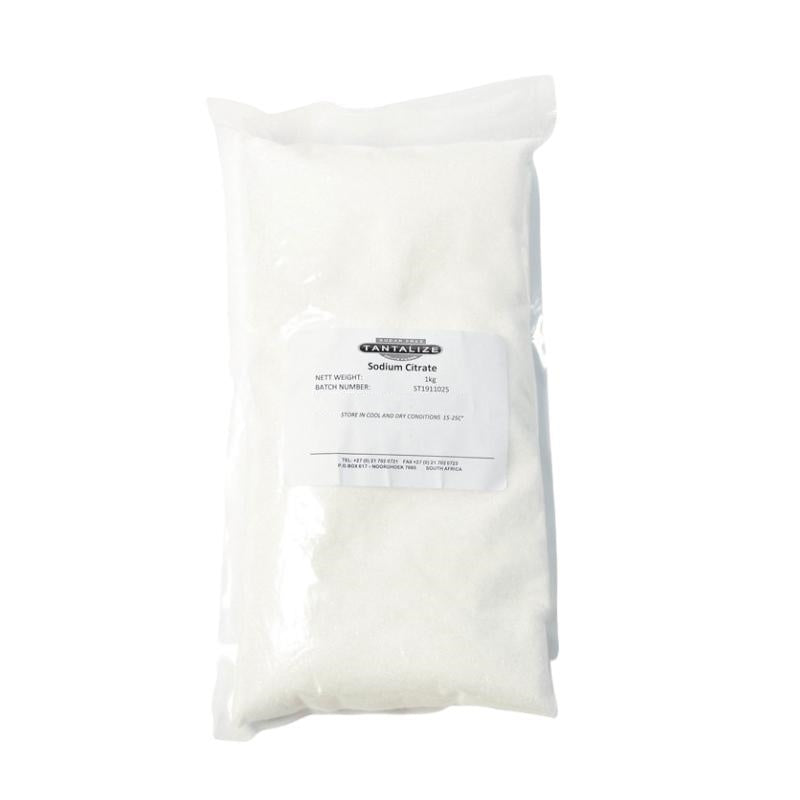

CFI Sodium Citrate - Food Grade (1kg)
CFI Sodium Citrate - Food Grade (1kg)
5 in stock — ready to ship.
Couldn't load pickup availability
CFI Sodium Citrate is a food-grade trisodium citrate powder used to regulate and buffer acidity in foods and beverages. Unlike citric acid, which is used mainly to lower pH, sodium citrate helps resist sudden pH changes and can soften sharp acidic flavour profiles. It is also valued as a chelating ingredient that binds certain mineral ions and supports stability in suitable food, cosmetic and cleaning formulations. This is a functional formulation ingredient rather than a preservative or finished product.
♡ Why we love it: Sodium Citrate is one of those behind-the-scenes ingredients that can make a food or formulation easier to balance and more consistent. We choose to offer it for makers who need controlled acidity without simply making a product more sour.
Key properties
- INCI Name: Sodium Citrate
- Also Known As: Trisodium Citrate
- Grade: Food Grade
- Ingredient Type: Acidity regulator, buffer and chelator
- Form: White crystalline powder
- Solubility: Water soluble
- Food Function: Acidity regulator and buffering agent
- Cosmetic Function: pH buffer and chelator
- Typical Cosmetic Usage Rate: 0.1-1%
- Food Use Level: Follow the recipe and applicable product-category regulations
- GMO-Free
- Biodegradable
- Suitable For: Foods, Beverages, Cosmetics, Bath Products And Cleaning Formulations
- Storage: Store tightly sealed in a cool, dry place away from moisture, heat and direct sunlight
What it's used for
- Buffering acidity in foods and beverages
- Softening an overly sharp acidic flavour
- Helping products remain within a more consistent pH range
- Supporting stability in sauces, drinks and other water-based foods
- Binding certain mineral ions in food and cosmetic systems
- Creams, lotions and gels as secondary cosmetic applications
- Water-softening support in compatible household cleaning products
Who it's for
- Food and beverage makers who need buffering rather than strong acidification
- Formulators balancing tartness and pH stability
- Makers working with water-based foods, cosmetics or cleaning products
- Bath and personal care formulators
- Users who can accurately weigh and dissolve powdered ingredients
- Use as a complete preservative system
- Direct use on skin without dilution or formulation
- Oil-only products with no water phase
- Recipes requiring a strong acid to lower pH significantly
- Addition without checking the final pH and flavour balance
This Product Is For:
This Product Is Not For:
How to use
- As a Food Buffer: Dissolve into the water phase at the amount required by the recipe.
- To Balance Acidity: Add gradually to soften excessive tartness or stabilise the pH of a suitable food or beverage.
- As a Chelator: Include in water-based systems where mineral ions may affect stability or performance.
- As a Cosmetic Ingredient: Add at 0.1-1% to the water phase of a suitable formulation.
- In Cleaning Products: Dissolve into the water phase where mineral-binding or water-softening support is required.
- Processing Tip: Measure the final pH after addition, as the result depends on the complete formulation.
Safety instructions
- Do not consume the concentrated powder directly
- Use only at a level suitable for the intended food or formulation
- Avoid inhaling airborne powder
- Avoid contact with eyes
- Use clean, dry equipment when handling
- Store tightly sealed and protected from moisture
- Keep out of reach of children and pets
- Products made for sale should comply with applicable food, cosmetic or household-product regulations
Faqs
Q: Is Sodium Citrate the same as citric acid?
A: No. Citric acid mainly lowers pH, while Sodium Citrate is generally used to buffer and stabilise acidity.
Q: Does Sodium Citrate make food less sour?
A: It can help soften sharp acidic flavours by buffering the formulation, depending on the other ingredients present.
Q: Is Sodium Citrate a preservative?
A: No. It can support product stability and pH control, but it does not replace a suitable preservation system.
Q: Can it be used in oil-only products?
A: No. It is water soluble and requires a water-containing phase.