Why Muscle Rubs Work And How To Make Them Safely
Aiden van WykYou ever rub someone's back out and immediately your fingers feel the crisp energy of the universe?
And then you’re very reasonably scared to use the bathroom for the next 6 business days.
Or make the big mistake of thinking it’s been long enough – use the bathroom – and then realise that the remnants of muscle soothing products are definitely not soothing in all locations?
More specifically, have you ever looked down at your hands and wondered “What the heck is happening? And what does cold skin have to do with muscles?”, looked at the ingredients and then thought “Oh, the old trifecta: nasties, menthol and the miracle of science.”
Here’s the thing – you aren’t tricking your muscles – or at least not in a unique way – and while the muscle rubs/balms from stores might contain some nasty ingredients, that is not what makes it work. You could make an even more powerful sensation right there at home, so potent that it could even be dangerous.
Learn here not only what makes muscle rubs/balms work, how nerves and the brain communicate, but also how to formulate one of the most satisfying DIYs safely.
Introducing muscle rubs to your DIY catalogue.
How The Body Detects Temperature
Hot and cold in a room temperature tube – that is the defining characteristic for muscle rubs – but is the body being tricked? Kinda. It is mostly a sensory illusion.
Your skin, like your gut, contains small sensors that constantly monitors the world around you. Some of these sensors are for pain, some for pressure, while others specialise in temperature and irritation. These sit on nerve endings throughout your skin and are like small alarm systems, sending signals to your brain about your environment.
All to protect you and keep you safe.
Scientists call these receptors TRP Channels - short for Transient Receptor Potential Channels – and the interesting thing is that specific compounds that have nothing to do with temperature can activate select receptors. When these receptors are activated, the brain interprets this activation as a change in temperature / sensation.
- Menthol stimulates TRPM8, creating a cooling sensation.
- Capsaicin stimulates TRPV1, creating a hot and spicy feel.
- Camphor and Eucalyptus stimulates TRPA1, creating a sharp, tingling and penetrating feeling. Not hot, not cold, but penetrating.
To put it simply, it’s not actually making your skin colder or hotter. It is activating the same receptors your body uses to detect cold, heat, and irritation, and your brain reads those signals as temperature or sensation changes.
Your brain then blends all of the signals into a full experience of cooling and warming, energising and numbing, relieving, and intensifying sensations simultaneously.
This is why two muscle balms can feel completely different – the formulator can choose the balance of heat, coolness and tingling by choosing which ingredients are included, and thereby which receptors are activated.
What Does Perceived Temperature Have To Do With Muscle Pain?
Two words: Signal overload.
One reason muscle balms can feel so effective is that the nervous system has to decide constantly which sensation deserves the most attention.
Your brain at any given moment is receiving a humongous amount of sensory inputs – smells, sounds, pressures, temperatures, itches, pains, visuals, and more. If your body treated each signal with the gravity that a potentially deadly signal might indicate (like for example, the heat of having your head on fire, or sound of a lion snarl nearby, just a small example of the weight some signals deserve) you would be overwhelmed by every change at all times.
In order to survive – your nervous system needs to prioritise.
You forget the sounds you’re hearing, become used to the smell of your own perfume and can be sometimes so entranced into the present moment that you forget the impending doom that follows your every step.
Stronger, more urgent sensations can partially override or compete with others.
This concept forms part of what researchers call “the gate control theory of pain”
It basically means that pain travels through the nervous system alongside many other sensations of varying urgency. Sensations like cold, heat, or penetrating might be interpreted by the body as so urgent that it “closes the gate” from other sensations like pain – making said discomfort feel less intense or dominant in the moment.
This is also why muscle rubs tend to combine multiple sensory effects at once – hot, cold, tingling, but don’t forget the strong smell as well and the vital pressure from the massage.
These combine into a flood of sensory information.
The massage activates pressure-sensitive nerve endings, and even just the smell can influence your emotional reality, memory, and relaxation.
You can feel taken care of.
All of this changes how the brain experiences discomfort.
Do Muscle Rubs Fix the Underlying Cause?
I hate to say it, but actually... no - not really.
You see, the ingredients are not repairing damaged tissue. If a muscle is strained, bruised, inflamed, or injured, a rub is not fixing the underlying cause.
What it can do, however, is change how that area feels while your body deals with the problem. In many cases, the relief comes from the combination of massage, pressure, warmth, cooling, tingling, aroma, and the nervous system reinterpreting what is happening in the area.
Pain is not only about damage. It is also about attention, perceived threat, and how loudly the brain decides to turn up a signal.
The more we focus on discomfort, the more intense it can feel. Strong sensory experiences can redirect attention away from pain and toward the sensation itself. Cooling, warming, tingling, and a massage gives the nervous system new information to process, which can make the original discomfort feel less dominant.
This is why massage products can sometimes feel soothing so quickly.
The muscle itself may not have changed in that moment, but the conversation between your brain and body has.
Is It A Waste To Use Muscle Balms?.
Well, if you have a headache – you don't solve the headache with a Panado. If you have body pains and you take a pain tablet – your body isn’t healed either. If you have a flu and take medicine for flu symptoms, that doesn’t fight the flu.
Many times, “medicine” is Symptom-relief focused; buying time till your body heals itself or until you can see a medical professional. Muscle rubs sit in a similar comfort-support space.
The Safety Of Active Ingredients In Massage Balms.
Why Wintergreen Deserves Extra Care.
While you may think that for a simulating massage balm you’ll need scientifically produced compounds, one of the most powerful ingredients you can use in massage balms – so potent that there are safety limitations on it in many countries – is literally the main compound in an essential oil.
It is also the greatest consideration when making a massage product.
Are you making it with wintergreen essential oil – or not?
Wintergreen is a perfect example of why natural does not automatically mean without risk.
Its main active compound, methyl salicylate, is powerful enough that products containing it often carry serious warnings. These may include a higher bleeding risk for people taking certain medications, as well as extra caution for older adults, people with a history of ulcers, kidney disease, or regular alcohol use.
Warnings also usually include the obvious-but-still-worth-saying bits: do not use on damaged skin, do not combine with a heating pad, do not use on young children, and avoid during pregnancy, particularly the last three months unless guided by a healthcare professional.
Methyl salicylate is absorbed through the skin more easily than many people realise. Once in the body, it is converted mainly into salicylic acid, a compound related to several pain-relief medicines.
This is why repeated or heavy use matters. For most healthy adults, careful occasional use is one thing. But in vulnerable people, especially those with kidney problems or other risk factors, too much methyl salicylate absorbed through the skin can become a real safety concern.
Massage Balms And Chemical Burns.
OTC (Over-the-counter) massage balms containing menthol, methyl salicylate, or capsaicin rarely do but can cause serious burns, sometimes after a single application and under 24 hours. In most cases this was with highly potent products that were wrapped onto skin with a bandage.
As a general rule, avoid tightly bandaging massage balms and always patch test, particularly at high doses of actives.
This is also why professional formulators pay close attention to dermal limits and safety recommendations. Organisations like IFRA publish guidance on ingredient usage, while suppliers often provide dermal maximums based on toxicological data. These limits exist because many aromatic compounds are biologically active and can become problematic when overused.
Cinnamon And Sensitisation Explained.
Cinnamon bark essential oil sounds perfect for a muscle rub.
Smells great, generates A LOT of heat and traditionally it has a history of being used in “deep heat” style rubs for comfort.
But here's the rub (pun 1000% intended) - cinnamon bark oil has a much narrower comfort window than gentler warming ingredients like ginger, black pepper, rosemary, or eucalyptus.
Its main active compound, cinnamaldehyde, activates heat and irritation receptors in the skin, creating that characteristic hot, spicy feeling. At very low levels this can feel pleasantly warming - but even just slightly higher amounts it can quickly become too intense and may cause redness, burning, itching, or irritation.
This is particularly important in heavy, occlusive balms, meant to stay on the skin for long. The slow evaporation causes the oil to stay in contact with the skin for longer, which increases the risk of irritation and reapplication before the true intensity is revealed. Heat, sweat, damaged skin or applying the rub after exercise or a hot shower can intensify this further – meaning that you may test it on normal skin while someone using your rub applied it after a hot shower and then got burned.
But here’s what makes this more dangerous: Sensitisation is worse than irritation by far.
Irritation is usually immediate and dose-related: the skin gets angry, you wash it off, and it calms. Sensitisation is different. Sensitisation means the immune system can become reactive to a compound over time, which may lead to stronger reactions later, even at much lower levels.
This does not mean cinnamon bark oil can never be used – as a matter of fact, in my research I found it in some store-bought rubs that had great reviews. What this means is that if it is included, it should be treated as an accent ingredient, not the main warming active.
For most DIY muscle rubs, essential oils like ginger, black pepper, camphor, rosemary, peppermint, or eucalyptus are easier to balance and generally more forgiving. If cinnamon bark is used at all, it should be used at very low levels, with proper patch testing and extra caution on sensitive skin.

Why Camphor Is So Useful In Muscle Rubs
Camphor is hands down one of the best ingredients for muscle rubs.
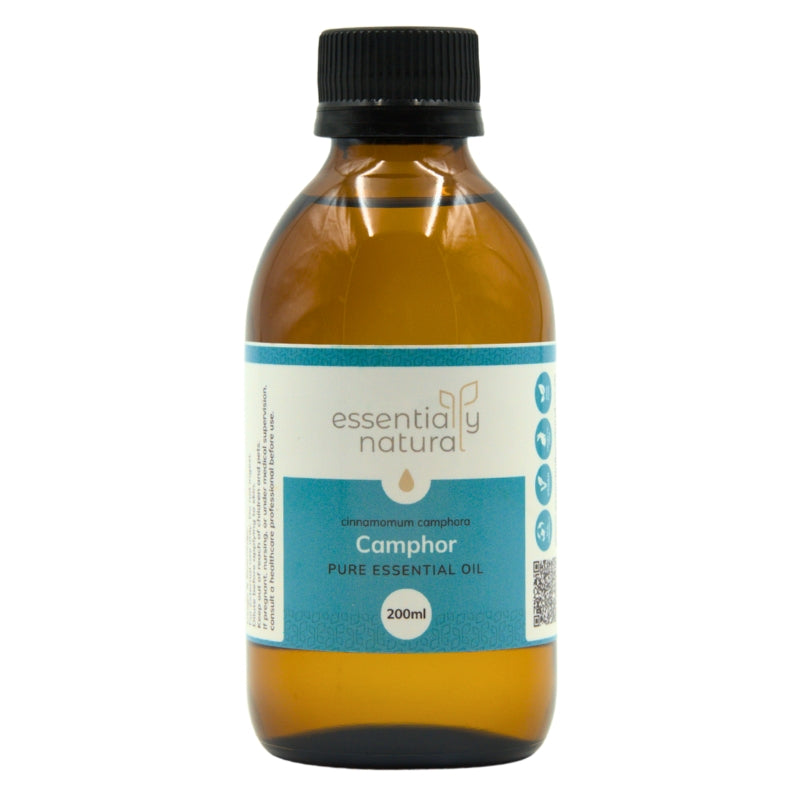
Camphor Essential Oil is one of the oldest ingredients used in traditional muscle rubs and has a unique ability to feel both cooling and warming at the same time. Unlike menthol, which primarily targets cold receptors, camphor interacts with several sensory pathways, creating the penetrating "deep heat" sensation many people associate with effective sports balms.
- It works particularly well alongside menthol, helping to create the layered cooling-then-warming experience.
- Despite its long history of use, camphor is a potent ingredient, and excessive amounts can cause irritation, making careful formulation important.
How Does The Massage Base Impact The Rub?.
The base of the rub makes or breaks the experience of using the rub. While you’d think that a muscle rub is mostly the actives, the base determines:.
- how quickly actives are released.
- how deeply they penetrate.
- how long they stay on the skin.
- how much massage time you get .
- how often the user will need to reapply while massaging.
- whether the balm feels cooling, warming, sharp, rich, medicinal, or luxurious.
Two rubs containing identical essential oils will be experienced completely differently simply because they use different base ingredients. Here’s how a few base ingredients interact with the formula:.
- Lanolin / Veggilanol: Highly occlusive, water-resistant, increases skin contact time.
- Ghee: Rich, nourishing, melts readily on contact with skin, excellent massage glide.
- Tallow: Rich, conditioning, semi-occlusive, adds cushion and a traditional balm-like feel.
- Shea Butter: Cushiony, creamy feel with moderate occlusion.
- Mango Butter: Smooth, creamy, and slightly drier-feeling than shea; adds body, cushion, and a soft non-greasy finish.
- Coconut Oil: Fast-melting, quick-spreading, lighter skin feel.
- Alcohol Gels: Quick evaporation, intense cooling sensation, many times does not have enough massage lubrication.
This is where formulation gets interesting: a richer base is not automatically better. Many times, it’s less helpful than a lightweight base.
Occlusive ingredients like lanolin, waxes, butters, and heavy fats help keep a rub on the skin for longer, which can make the sensation feel more sustained and give you more time to massage tense areas. However, that same richness can also slow the release of your actives, making the cooling or warming effect feel softer and more gradual.
This is why a dense balm, alcohol gel, and massage oil can feel completely different even when they use similar actives. A balm tends to feel richer, slower, and longer-lasting. An alcohol gel feels sharper and more immediate, but tends to offer less massage glide. A massage oil sits somewhere between the two: easier to spread than a balm, more massage-friendly than a gel, and often quicker-releasing than a heavy wax-and-butter base.
Lanolin is particularly useful when you want grip and staying power. We noticed how lanolin is often used as an anti-chafing ingredient in reviews, the immediate inference is that it clings to the skin for extended periods and allows the smooth rubbing of skin, making it popular in products designed for friction protection, and prolonged skin contact. In a muscle balm, this means cooling or warming ingredients may remain active on the skin for longer compared to lighter formulations.
Ghee plays a different role. It melts at skin temperature and gives excellent massage glide, making it useful when you want a rub that feels rich and workable rather than waxy. Traditional massage formulas have used ghee for this reason: it allows prolonged contact without disappearing too quickly.
The problem is that oils tend to release the actives slowly and slightly dull it – which is what you’ll notice when you try to make it yourself. A workaround I found for this is to add a bit of ethanol. Ethanol combines nicely with oils if used at lower amounts and helps increase the speed of evaporation of your rub. This allows the actives to be felt sooner – particularly the chill of the menthol.
The key is balance. A good muscle rub should give enough glide for massage, enough structure to stay on the skin, and enough release for the cooling or warming ingredients to actually be felt.
In other words, the base is not just carrying active ingredients. It controls the rhythm of the whole experience.
Combine Ingredients Like A Chef.
Once you understand how ingredients interact with the nervous system, you start to notice that muscle rubs fall into one of three categories. Some focus on cooling sensations, some focus on warming sensations, and others combine the two to create a more complex experience.
Cooling Blends.
Cooling balms are typically built around ingredients like menthol crystals, peppermint, and eucalyptus.
These tend to be used after exercise, on hot days, for tired feet, or for muscles that feel overworked and inflamed. The sensation can feel refreshing, invigorating, and quickly noticeable.
Because ingredients like menthol evaporate relatively quickly, cooling blends are more often in lighter bases and gels that allow the sensation to develop faster than in a balm.
Warming / Penetrating Blends.
Warming balms stimulate receptors associated with heat, circulation, and irritation. Common examples include ginger, black pepper, capsicum, wintergreen, and, historically, cinnamon bark.
These ingredients tend to produce a slower-building sensation that many people associate with comfort, relaxation, and loosened muscles. Warming blends are often favoured for stiffness, chronic muscle tightness, cold weather, or pressing out those “knots” found in your cricked neck.
Interestingly, many traditional muscle rubs were intentionally formulated as “mild rubefacients”. In other words, they create slight redness and warmth on the skin, not because irritation was the goal, but because the resulting sensation could help distract from discomfort and create a feeling of increased circulation.
Complex Blends: Why Cooling and Warming Together Feel So Deep.
Some muscle balms don’t choose between cooling and warming ingredients - they use both.
Cooling ingredients like menthol stimulate one set of sensory receptors, while warming ingredients like camphor, ginger, or wintergreen stimulate others. This gives the nervous system multiple signals to interpret at once, creating that layered “deep” feeling many people associate with effective muscle rubs.
How To Use Muscle Rubs Safely.
Muscle rubs can be incredibly useful, but they are not “more is more” products. The same ingredients that create cooling, warming, tingling, and relief can also irritate the skin when used carelessly.
The following applies to all muscle rubs, not just ones containing Wintergreen Essential Oil.
Avoid applying them to cuts, rashes, freshly shaved areas, sunburn, or very irritated skin. Do not apply them before using a heating pad, hot water bottle, sauna, hot bath, or electric blanket, as heat can intensify ingredients like menthol, camphor, capsicum, and wintergreen.
Avoid using strong adult muscle rubs on children, during pregnancy, or on anyone with sensitivities to pain meds, fragrance sensitivity, asthma, kidney issues, or those taking blood-thinning medication unless they have checked with a healthcare professional first.
Apply a small amount first, massage it in, and wait at least 10 minutes to see how the sensation develops. Most cooling and warming ingredients build over time, especially in richer balms that keep actives on the skin for longer. Do not tightly bandage the area or keep reapplying because you “can’t feel it yet”.
And please, even if you wash your hands thoroughly – just wait a while before using the bathroom after having this on your hands. Take it from someone who learnt this lesson too many times while testing this DIY.