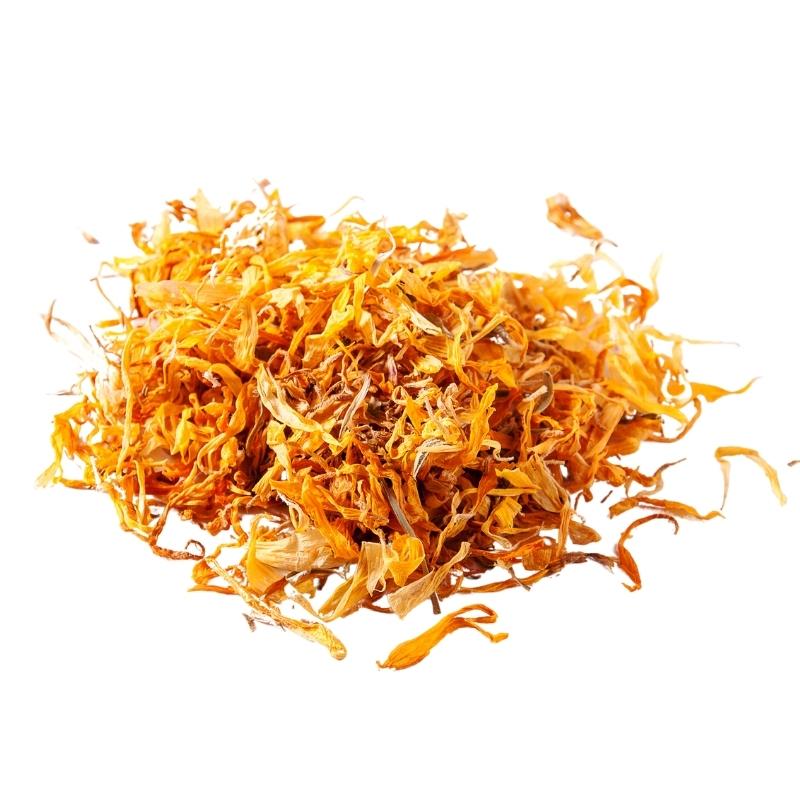
Marigold Flowers (Calendula officinalis) - Bulk
Marigold Flowers (Calendula officinalis) - Bulk
2 in stock — ready to ship.
Couldn't load pickup availability
Marigold Flowers are dried blossoms of Calendula officinalis, long valued for their bright golden colour and versatility across tea, oil infusions, bath blends, and botanical making. Also known as calendula, they have been used traditionally in food, herbal preparations, and skin-focused recipes across many cultures. The dried flowers can be infused into water, oil, alcohol, or vinegar depending on the style of preparation, which makes them especially useful for both pantry and maker routines. In a bulk format, they are particularly practical for repeat blending, refill-style use, and larger batch food or cosmetic projects.
♡ Why we love it: Marigold feels like sunshine in botanical form. We love the vivid golden colour, the ease of working with the petals, and the way they move so naturally between tea, infused oils, bath blends, and creative DIY projects. It is exactly the kind of ingredient we value at Essentially Natural: naturally expressive, versatile, and beautifully suited to both food and cosmetic making.
Key properties of marigold flowers
- Botanical Name: Calendula officinalis
- Common Name: Marigold, Calendula
- Plant Part: Flower
- Form: Dried flowers
- Colour Profile: Golden yellow to orange
- Ingredients: Dried Marigold Flowers (Calendula officinalis)
- Country Of Origin: Egypt
- Suitable For: Food and cosmetic use
What are marigold flowers used for
- Brewing calendula tea and simple herbal infusions
- Preparing oil infusions for balms, salves, and creams
- Making bath blends, compresses, and hair rinse infusions
- Adding natural colour to soaps, scrubs, and handmade products
- Using in culinary projects such as salads, baking, and herbal vinegars
- Exploring different extraction styles including oil, water, alcohol, and vinegar
- Repeat-use making where a versatile flower is needed across food and cosmetic applications
Who are marigold flowers for
- Tea blenders and refill-style ranges that use versatile edible flowers regularly
- DIY makers working with infused oils, balms, creams, and bath blends
- Botanical kitchens using petals for natural colour in food and drinks
- Formulators exploring different extraction styles for food or cosmetic projects
- Herbal cupboards and maker spaces that benefit from a flexible flower for repeat use
- Ready-made skincare or finished herbal product preferences
- Projects that need a concentrated extract rather than a dried flower ingredient
- Preparations where no infusion, maceration, or steeping is wanted
Marigold Flowers Are For:
Marigold Flowers Are Not For:
How to use marigold flowers
- As a Tea: Add 1 tablespoon of dried flowers to a teapot for 3 to 4 cups of tea, steep for at least 5 minutes, then strain.
- As an Oil Infusion: Macerate the dried petals in a suitable carrier oil, then strain and use in balms, salves, creams, or massage blends.
- As an Alcohol Extract: Prepare a tincture-style extract using your preferred method where a more concentrated botanical extract is wanted.
- As a Water Infusion: Brew as a tea or infusion for compresses, skin washes, bath blends, or hair rinses.
- As a Vinegar Infusion: Infuse into vinegar for herbal rinses, culinary vinegars, or other botanical projects.
- As a Culinary Ingredient: Use sparingly in salads, baking, or other edible recipes where a floral pop of colour is wanted.
- Processing Tip: Different solvents draw out different qualities of calendula, so choose your extraction style based on how you plan to use the finished preparation.
- Processing Tip: Strain well when preparing external rinses or water-based applications for a smoother finish.
Marigold flowers safety instructions
- If pregnant or breastfeeding, seek advice from a qualified healthcare practitioner before use in therapeutic-style amounts.
- For topical use, patch test before wider application.
- Avoid contact with eyes.
- Discontinue use if any adverse reaction occurs.
- Keep out of reach of children and pets.
Faqs
Q: Are marigold flowers the same as calendula?
A: In this context, yes. This product is Calendula officinalis, commonly referred to as marigold or calendula.
Q: Can I make calendula tea with these flowers?
A: Yes. They can be brewed as a simple herbal tea by steeping the dried flowers in hot water and then straining.
Q: What is the best way to use marigold flowers in DIY skincare?
A: Oil infusion is one of the most popular approaches, especially for balms, salves, and creams, while water infusions
are often used for baths, compresses, and rinse-style preparations.
Q: Can these flowers be used in food?
A: Yes. Calendula petals are edible and are often used to add natural colour to salads, baking, and other culinary
projects.
Q: Why would I choose oil instead of water for an infusion?
A: Oil infusions are often chosen for richer, skin-focused preparations, while water infusions are more suited to
teas, baths, compresses, and hair rinses.
Q: Can marigold flowers be used in soap and scrubs?
A: Yes. They are often used to add botanical colour, texture, and visual interest to handmade soaps and scrubs.
Q: Is this suitable for repeat-use making?
A: Yes. The dried flower format is practical for regular tea brewing, ongoing infused-oil projects, and larger batch
botanical preparation.
Q: What does calendula pair well with in blends?
A: Calendula pairs well with gentle botanicals such as chamomile, lavender, rose, and other flowers commonly used in
tea or skincare-style blends.
About These Botanicals
This product is grown in an organic and regenerative fashion with as minimal use of insecticides, pesticides, herbicides and fungicides as possible, in certified organic fertilizer. The product is sourced food grade. It is not certified organic. Suitable for Kosher, Halaal and Hindi diets.