

DIY Gel Creams
Juliette van der MeerGel creams seem to be all the rage right now and for good reason: they are wonderfully lightweight, non-greasy, good-for-the-skin gel-like creams. What's not to love!
Making Your Own Gel Cream
There are various ways to make a gel cream from scratch, many of which employ a gelling agent which also has emulsifying properties. Unfortunately we don't have easy access to these fancy gelling agents in South Africa so we must find another way to overcome this. Let's take a deeper look.
Gel creams, by their nature, have characteristics of both gels and creams. Gels are made by combining a gelling agent such as a gum or HEC with water, and creams are emulsions using oil, water and an emulsifier. So how can we combine the two?
The answer lies in the common denominator, water. By replacing the water component in the emulsion with gel, we are still getting all our water in, just in gel form. You end up with a light and non-greasy gel-like cream that is perfect for face or body. Gel creams are my go-to when making a lightweight facial moisturiser or day cream.
The Gel Part
If you are new to gels, please read Fun With Plant Based Gels for info and instructions on how to make up your gel. There are various gels to choose from but the two that are preferable for gel creams are xanthan gum and/or hydroxyethyl cellulose (HEC).
- An HEC based gel cream gives an exceptionally lightweight, barely-there skin feel. It is non-greasy and ultra quick absorbing.
- A xanthan gum based gel cream gives a very moisturising skin feel due to the xanthan gum, but at the same time it also makes a fast absorbing cream. Xanthan gel creams have great spreadability so a little goes quite a long way.
I prefer to make up the gels beforehand, and then use ready-made gel in the formula.
Tip: if you want to jazz up your gels for additional skin benefits you can replace some or all of the water component with a hydrosol or botanical infusion.
The Perks Of Gel
The great thing about using a gel in an emulsion is that gels, by their nature, act as stabilisers and thickeners so you never have to worry about separation in your emulsion, or using an extra thickener.
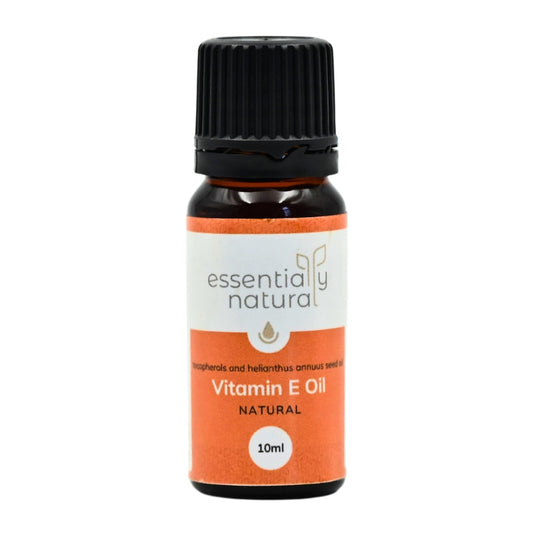
Below is a basic gel cream recipe which uses only the very key components necessary - just four ingredients. Feel free to customise it by choosing your favourite oil(s), making the gel out of botanical infusions or even a hydrosol, or adding in essential oils or other 'extras'. I don't find it necessary to use vegetable glycerine in these formulas, as there is glycerine in the gels already.






2 comments
Hi there Erin :)
That’s a great question – thank you for asking!
When the gel cream was desrcibed as an ideal base for makeup or as an initial moisturiser, that means it’s a very lightweight, quickly absorbing cream that works beautifully under other products.
As a makeup base, it provides a smooth, hydrated surface for foundation or tinted moisturiser without feeling greasy or heavy (acts like a primer would) – though it doesn’t really contain the silicones you’d typically find in store-bought primers.
As an initial moisturiser, it means it can be the first layer in a skincare routine – perfect for layering products. People with oilier or combination skin might find it perfect on its own, while those with drier skin may prefer to apply a richer cream or facial oil over it to lock in extra moisture.
It’s basically a versatile product that can be adapted to different routines and skin types.
I hope that helps. Please do reach out if you have any further queries, we’d love to help. <3
Warm regards,
The Essentially Natural Team
Hi! Love the recipes and inspiration, thanks!
Just above the 2nd Gel Cream recipe you say the following : " It yields a very lightweight cream that would make an ideal base for makeup or as an initial moisturiser". Could you expand on this description please? Did you mean as a makeup base, it has to go over other moisturisers like a primer would? Or with ‘initial’, did you mean its only recommended as one of multiple layers of moisturisers to be worn? Or just that people with dry skin would likely need more in a moisturiser than this recipe alone?