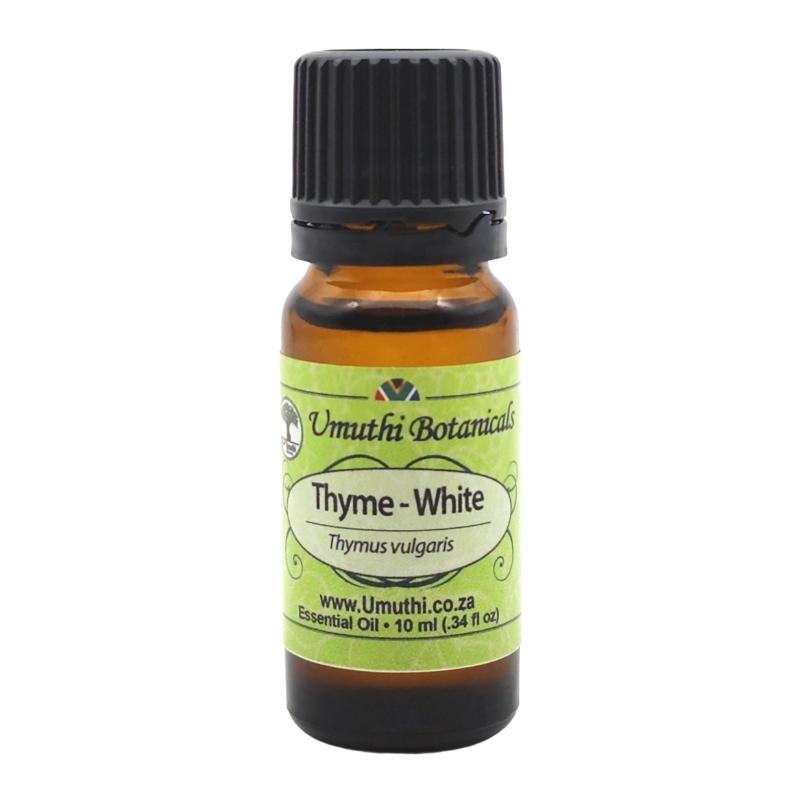
Umuthi Thyme (White) Pure Essential Oil
Umuthi Thyme (White) Pure Essential Oil
1 in stock — ready to ship
Couldn't load pickup availability
Umuthi Thyme (White) Pure Essential Oil is a strong, South African-distilled essential oil from Thymus vulgaris . It has a powerful herbal profile that is useful in inhalation-style aromatherapy, diffuser blends, and functional wellness formulations. White Thyme is especially suited to seasonal respiratory-style routines, concentration blends, and practical botanical formulations where a bold thyme note is wanted. This is one of the stronger essential oils, so it is best suited to experienced users and carefully considered formulations.
♡ Why we love it: White Thyme is a serious herbal oil with a strong, purposeful character. It is ideal for makers who want a robust thyme profile for seasonal aromatherapy and practical formulations where gentle florals simply will not do.
Key properties
- Botanical Name: Thymus vulgaris
- Form: Essential oil
- South African Distilled
- Aroma Profile: Strong, powerful herbal aroma
- Suitable For: Aromatherapy, inhalation-style blends, diffuser blends, and experienced formulation use
- Purity: 100% pure essential oil
What it's used for
- Creating inhalation-style seasonal blends
- Supporting respiratory-style routines for congestion and phlegm
- Adding to diffuser blends for focus and concentration
- Using in practical wellness formulations with a strong herbal profile
- Supporting scar-focused formulations at suitable dilution
- Adding a bold thyme note to functional aromatic blends
Who it's for
- Experienced essential oil users
- Aromatherapy users working with strong herbal oils
- Makers creating seasonal wellness blends
- Formulators needing a robust thyme profile
- Delicate floral or sweet citrus scent profiles
- Products needing a neutral or unscented ingredient
- Water-only formulations without a suitable solubiliser
- Those looking for a gentle everyday oil
This Product Is For:
This Product Is Not For:
How to use
- As an Inhalation Blend: Use in inhalation-style applications where a strong thyme note is appropriate.
- As a Diffuser Oil: Add sparingly to diffuser blends with other herbal, eucalyptus, citrus, or woody oils.
- As a Functional Formulation Ingredient: Use at a conservative level in suitable products.
- Processing Tip: Inhalation-style use is preferable to massage or bath use, as the source notes that White Thyme can irritate the skin.
Safety instructions
- For external use only
- Do not ingest
- Always dilute before topical application
- Spot test before skin use
- This is a very potent oil and toxicity is possible with prolonged use
- Do not use if you have high blood pressure
- Do not use during pregnancy
- Avoid contact with eyes and mucous membranes
- Store away from children, pets, sunlight, and heat
- If breastfeeding, seek professional guidance before use
Faqs
Q: Why is inhalation preferred for White Thyme?
A: The source notes that inhalations are preferable to massage or baths because this oil can irritate the skin.
Q: Is White Thyme a gentle essential oil?
A: No. It is a strong essential oil and is better suited to experienced users and careful formulation.
About Essential Oils In General
Essential oils are highly concentrated plant essences. The ingestion of essential oils is not recommended without prior advice from your health care practitioner. Dilute in a carrier or base when necessary. Read our quick guide: Essential Oils
About Standardised Essential Oils
Standardised essential oils are produced to achieve a standard scent, whereas a single species essential oil may vary in scent because it is an individual plant species that can naturally vary with season, rainfall, soil quality, geography and a variety of other factors. Standardising the scent by combining multiple species is a method of producing an oil that will always be similar in quality. Standardised oils can therefore be quite beneficial when scent reliability is required.
Standardised essential oils are pure essential oils which have not been diluted, filled or altered in any way. The only differentiating factor between standardised essential oils and others is that multiple variations of plant species are distilled.