


Sodium Citrate - Essentially Natural
Sodium Citrate - Essentially Natural
6 in stock — ready to ship.
Couldn't load pickup availability
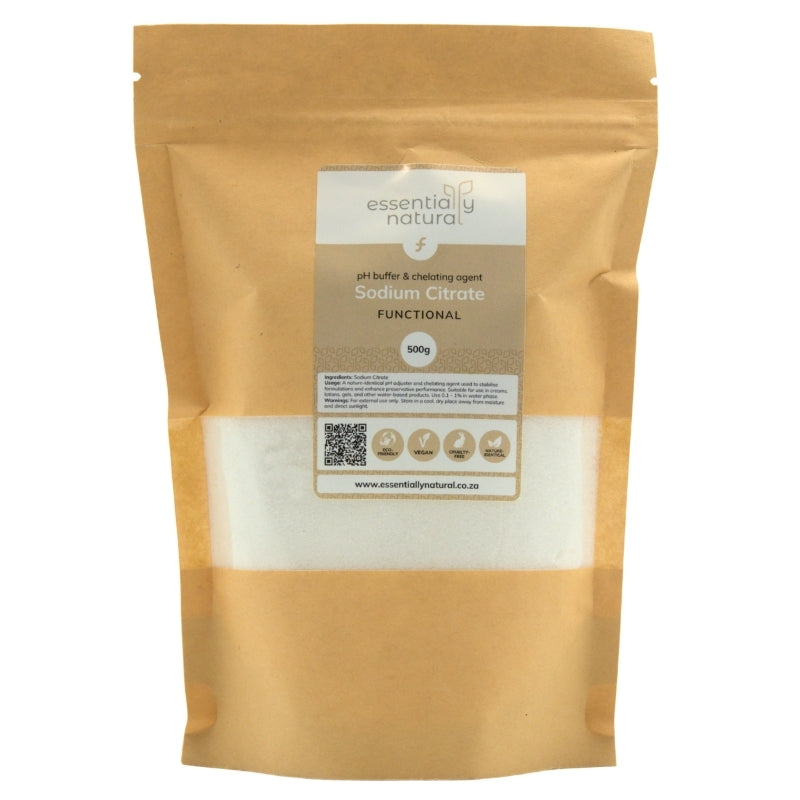
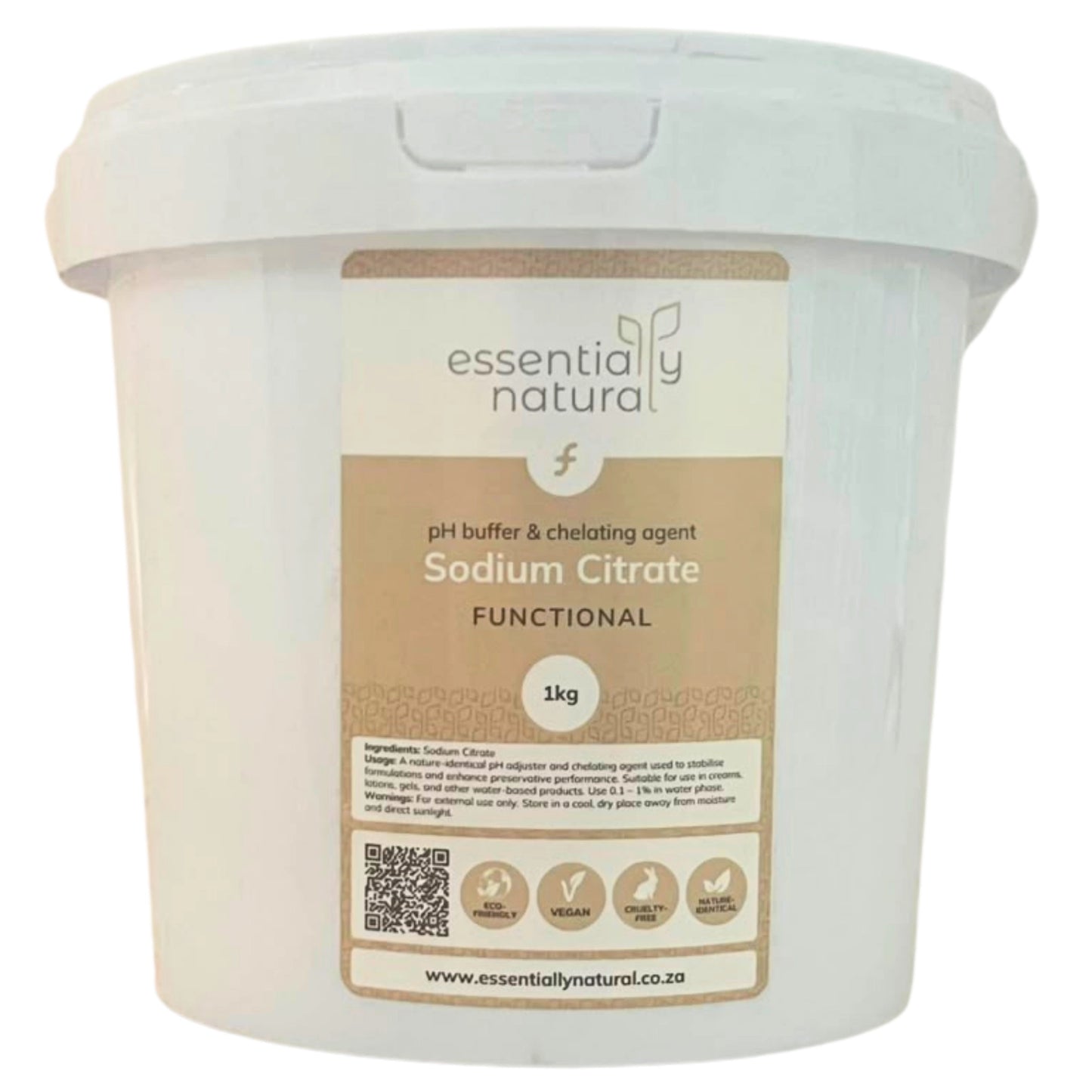
Essentially Natural Sodium Citrate is a white crystalline powder used as a buffering and chelating ingredient in cosmetic, household and cleaning formulations. Also known as trisodium citrate, it helps formulas remain within a more consistent pH range and binds certain metal ions found in hard water. This can support product stability, reduce unwanted discolouration and improve the performance of suitable cleaning products. It is water soluble and should be dissolved into the water phase.
♡ Why we love it: Sodium Citrate is a versatile formulation helper that performs several useful roles without making a formula unnecessarily complicated. It is especially practical where pH stability and hard-water mineral control are important.
Key properties
- INCI Name: Sodium Citrate
- Also Known As: Trisodium Citrate
- Ingredient Type: Buffering agent and chelator
- Form: White crystalline powder
- Solubility: Water soluble
- Typical Usage Rate: 0.1-1%
- GMO-Free
- Biodegradable
- Suitable For: Cosmetics, Household Products And Cleaning Formulations
- Food Safety Note: Food safe for personal use, not certified food grade
- Storage: Store tightly sealed away from moisture, humidity, heat and direct sunlight
What it's used for
- Buffering pH in creams, lotions and gels
- Helping formulations remain within a more stable pH range
- Binding calcium, magnesium and other metal ions
- Supporting formula stability in hard-water conditions
- Reducing mineral-related discolouration
- Improving suitable household and cleaning formulations
- Personal food applications where an acidity regulator or citrate buffer is appropriate
Who it's for
- DIY formulators working with water-based cosmetics
- Makers who need gentle pH-buffering support
- Products affected by hard-water minerals
- Household and cleaning product formulators
- Experienced users preparing suitable personal food applications
- Use as a finished cosmetic product
- Formulas requiring a strong acid to reduce pH significantly
- Commercial edible products intended for resale
- Oil-only products with no water phase
- Anyone unable to handle fine powdered ingredients safely
This Product Is For:
This Product Is Not For:
How to use
- As a pH Buffer: Dissolve in the water phase at 0.1-1% and adjust according to the needs of the full formulation.
- As a Chelator: Add to suitable water-based products to help bind metal ions and reduce the effect of hard water.
- In Cleaning Formulas: Dissolve into the water phase where mineral binding or water-softening support is required.
- For Personal Food Use: Use only where the application and appropriate quantity are fully understood.
- Processing Tip: Mix until completely dissolved before combining with other phases.
- Testing Tip: Measure the finished product pH rather than relying on the ingredient to produce a specific result.
Safety instructions
- Avoid inhaling airborne powder
- Avoid contact with eyes
- Wear suitable eye protection when handling larger quantities
- Use clean, dry utensils
- Keep tightly sealed and protected from moisture
- Discontinue topical use if irritation occurs
- Keep out of reach of children and pets
Faqs
Q: Is Sodium Citrate the same as citric acid?
A: No. Citric acid is commonly used to lower pH, while Sodium Citrate is mainly used to buffer and help stabilise pH.
Q: Can Sodium Citrate raise the pH of a formulation?
A: It can influence the final pH, but its main role is buffering. The complete formula should always be measured and
adjusted as needed.
Q: Why is Sodium Citrate useful in hard-water areas?
A: It can bind calcium and magnesium ions, helping reduce their effect on stability, appearance and cleaning
performance.
Q: Can it be used in bath bombs?
A: It can be included in bath bomb formulations, but the result depends on the full recipe, moisture control and the
balance with citric acid.
Q: Is it a preservative?
A: No. It can support a preservation system by helping maintain the target pH, but it does not replace a suitable
preservative.




Recently viewed
Related Reads
-

The Importance of pH in Formulation
Learn all about pH, how it impacts formulations and how you can formulate to consider pH.
The Importance of pH in Formulation
Learn all about pH, how it impacts formulations and how you can formulate to consider pH.


